by Jamie Pantastico | Dec 21, 2023 | Daily Encouragement |
Comparing Peter’s Epistle to Isaiah 53:4
In Isaiah 53:4, the prophet, writing 700 years before the cross, foretells the suffering of the Messiah:
“Surely he has borne our griefs, and carried our sorrows: yet we esteemed him stricken, smitten of God and afflicted.” Centuries later, the apostle Peter, writing specifically to Jewish believers, reinforces this prophecy.
Peter’s Confirmation in I Peter 2:21–25
In I Peter 2:21–25, Peter addresses Jewish Kingdom believers (Jews who believed Jesus was Israel’s promised Messiah and the Son of God), emphasizing that Christ suffered for them, leaving an example to follow:
I Peter 2:21–25
‘For to this you were called, because Christ also suffered for us, leaving us an example, that you should follow His steps: “Who committed no sin, Nor was deceit found in His mouth”; who, when He was reviled, did not revile in return; when He suffered, He did not threaten, but committed Himself to Him who judges righteously; who Himself bore our sins in His own body on the tree, that we, having died to sins, might live for righteousness—by whose stripes you were healed. For you were like sheep going astray, but have now returned to the Shepherd and Overseer of your souls.’
These verses parallel Isaiah’s prophecy, depicting Jesus’ innocence (in other words, He wasn’t crucified for anything He did), humility, and sacrifice, fulfilling the foretold suffering.
Paul’s Insight in II Corinthians 5:21
Shifting to a broader audience (all mankind, both Jews and Gentiles, apart from the law), through Paul’s epistle, II Corinthians 5:21 proclaims a truth for all mankind:
“For he hath made him to be sin for us, who knew no sin; that we might be made the righteousness of God in him.”
Paul, the Apostle of the Gentiles, reveals the culmination of God’s plan of redemption for the entire world. Christ, sinless and bearing the sins of humanity, exemplifies the redemption foretold in Isaiah 53.
Returning to Peter’s Epistle and Isaiah 53:4
In I Peter 2:23–25, Peter echoes Isaiah’s words, portraying Christ’s humility and sacrifice:
“Who, when he was reviled, he reviled not again; when he suffered, he threatened not; but he committed himself to him that judgeth righteously: 24. Who his own self bare our sins in his own body on the tree, that we, being dead to sins should live unto righteousness: by whose stripes you were healed.”
The imagery aligns with Isaiah 53:4, where the suffering servant bears the sins of many.
Spiritual Healing in I Peter 2:24
Contrary to physical healing, Peter clarifies that the healing in I Peter 2:24 refers to spiritual restoration:
“Who his own self bare our sins in his own body on the tree, that we, being dead to sins should live unto righteousness: by whose stripes you were healed.”
This healing mirrors Isaiah’s prophecy, bringing the once-veiled message into sharp focus after the fulfillment of the cross.
Sheep Led Astray and Returning to the Shepherd
Drawing from Isaiah 53 and the parable of the lost sheep (Matthew 18:10–14), Peter describes Israel as sheep led astray:
“For you were as sheep going astray; but now you are returned unto the Shepherd and Bishop of your souls.”
In I Peter 2:25, he emphasizes their return to the Shepherd, their Messiah, who is also the Bishop of their souls. This shepherd’s imagery aligns perfectly with Isaiah’s depiction of the suffering servant.
Understanding Prophecy After the Cross
Peter, writing to Jewish believers, and Paul, addressing both Jews and Gentiles apart from the law, provide post-cross insight into Isaiah 53. The fulfillment of these prophecies clarifies their once-veiled nature. Before the cross, comprehension of Isaiah 53 eluded Israel. Now, with the crucifixion behind them, the apostles reveal the profound connection between prophecy and its realization in the life, death, and resurrection of Jesus Christ.
Conclusion: Supernatural Precision of God’s Word
As you study Isaiah 52 and 53, along with the writings of Peter (under the law) and Paul (under grace), we encounter a supernatural precision that spans centuries. Isaiah, writing some 700 years before the cross, prophetically unveiled the intricate details of the Messiah’s redemptive work. This prophetic truth finds stunning confirmation in the writings of the apostles Peter and Paul.
The graphic details of Isaiah’s prophecy resonate vividly in Peter’s epistle to Jewish believers and Paul’s broader teachings to both Jews and Gentiles. The foretelling of Christ’s bearing of sins, His innocence (in other words, He didn’t die for anything that He did), and the spiritual healing through His stripes echo seamlessly across these different portions of Scripture.
Crucial to unraveling this divine plan of redemption is the principle of rightly dividing the Scriptures. Understanding who the writer is, their audience, and the context of the passage is paramount. Peter addresses Jewish believers under the law, while Paul’s words encompass a broader audience apart from the law, including both Jews and Gentiles. This distinction is essential to grasping the progressive revelations of God’s redemptive plan.
Moreover, it’s imperative to approach Scripture with an “in time” perspective, recognizing the progressive nature of God’s revelation. Attempting to leap ahead or imposing later revelations on earlier texts can distort the intended message. The Bible unfolds progressively, unveiling God’s plan with precision at the appointed times.
In this symphony of divine revelation, the Bible goes far beyond human wisdom, revealing the supernatural orchestration of God’s plan for humanity. The prophetic preordained plan written through Isaiah, Peter, and Paul magnificently showcases the supernatural precision of the Scriptures. It serves as a profound testament to the divine nature of God’s Word and underscores the importance of approaching it with discernment, rightly dividing the Word of Truth one passage at a time.
If this post has enlightened you in any way, please consider sharing it with someone.
God bless.

by Jamie Pantastico | Dec 19, 2023 | Daily Encouragement |
The apostle Paul, in the book of Romans, clearly delineates a vivid contrast between the efficacy of the Law and the transformative power of God’s grace. In Romans 3:19–20, he unequivocally declares the Law’s role in bringing awareness of sin, silencing every mouth, and rendering all humanity guilty before God.
All Mankind Stands at the Crossroad of Condemnation and Redemption
In the heart of the book of Romans, the apostle Paul depicts humanity standing at the crossroad of condemnation and redemption. In Romans 3:19–20, he starkly outlines the inherent incapacity of the Law to justify or save anyone. “Whatever the law says, it says to those under the law,” Paul declares, leaving every mouth silenced and the entire world guilty before God. The Law, rather than providing salvation, serves to illuminate the knowledge of sin and condemnation.
‘Now we know that whatever the law says, it says to those who are under the law that every mouth may be stopped, and all the world may become guilty before God. Therefore, by the deeds of the law, no flesh will be justified in His sight, for by the law is the knowledge of sin.’
(Romans 3:19-20)
These verses underscore the Law’s inability to justify or save; its purpose is to illuminate the reality of sin. Yet, in the subsequent verses (Romans 3:21–26), the apostle Paul reveals – the righteousness of God apart from the law is disclosed, witnessed by both the Law and the Prophets.
‘But now the righteousness of God apart from the law is revealed, being witnessed by the Law and the Prophets, even the righteousness of God, through faith in Jesus Christ, to all and on all who believe.’
(Romans 3:21-22)
In this new revelation, the focal point shifts from condemnation to justification. Paul makes it crystal clear that faith alone in Jesus Christ is the unifying factor for all who believe. The pivotal work of Christ—His shed blood, death, burial, and resurrection—becomes the redemptive source, justifying freely by God’s grace. This is a universal truth, as all have sinned and fallen short of God’s glory.
‘For all have sinned and fall short of the glory of God, being justified freely by His grace through the redemption that is in Christ Jesus, whom God set forth as a propitiation by His blood, through faith, to demonstrate His righteousness.’
(Romans 3:23-25)
Paul beautifully illustrates God’s plan of redemption—to demonstrate His righteousness while justifying those with faith in Jesus. This plan, encompassing grace and redemption, reveals God’s justice and mercy in dealing with human sin.
‘…that He might be just and the justifier of the one who has faith in Jesus.’ (Romans 3:26)
Takeaway
In these eight verses, Paul encapsulates the profound shift from the Law’s condemnation to the grace-filled justification through faith in Jesus Christ. It is a powerful testament to the transformative work of the gospel, a message of God’s amazing grace—salvation is not by the deeds of the law but through faith in the redeeming work of Jesus Christ.

by Jamie Pantastico | Dec 16, 2023 | Daily Encouragement |
‘Yet in all these things we are more than conquerors through Him who loved us. ‘
Romans 8:37
What are the “things” to which Paul is referring?
In Romans 8:37, the Apostle Paul refers to “yet in all these things” various challenging circumstances or adversaries that believers may face. Paul is referring to verse 35, ‘Who shall separate us from the love of Christ? Shall tribulation, or distress, or persecution, or famine, or nakedness, or peril, or sword?’
Here’s a breakdown of the “things” mentioned in Romans 8:37:
1. “tribulation” – Refers to trials, distress, or hardships.
2. “distress” – Signifies extreme difficulty, pressure, or anguish.
3. “persecution” – Involves hostility, mistreatment, or oppression for one’s beliefs.
4. “famine” – Indicates scarcity of food or resources.
5. “nakedness” – Represents a lack of clothing or basic necessities.
6. “peril” – Denotes exposure to serious danger or risk.
7. “sword” – Symbolizes the threat of violence or conflict.
Despite facing these formidable challenges, Paul proclaims that believers are “more than conquerors” through Christ, who loves them.
We are conquerors, no matter what! Why? Because God said we are, and we believe Him.
Faith above all.

by Jamie Pantastico | Dec 16, 2023 | Daily Encouragement |
Be Encouraged
Scripture: Romans 8:37
“Yet in all these things we are more than conquerors through Him who loved us.”
If you haven’t noticed already, the life of a believer is a battlefield, where trials and tribulations come at us from every direction. In those moments of struggle, it’s easy to question our strength, endurance, and even our faith. But fear not, for in the midst of it all, we have a powerful promise to cling to—a promise found in Romans 8:37.
The apostle Paul, inspired by the Holy Spirit, tells us that “in all these things, we are more than conquerors through Him who loved us.” Notice the emphasis on “more than conquerors.” This is not just about surviving or enduring; it’s about triumphing in a way that exceeds our expectations.
Resurrection Power
The victory we have is not based on our own might, skills, or abilities; it’s rooted in the finished work of Christ, “Resurrection Power”. Our conquering power (Romans 1:16) comes from Him who loved us so much that He triumphed over sin, the law, Satan, and even death itself. Christ’s victory becomes our victory.
As believers, we are not defined by our circumstances. We are defined by the overwhelming, unconditional love of Christ. No matter what trials we face—be it sickness, financial struggles, relationship challenges, or the weight of our past—we are more than conquerors.
Take a moment to reflect on the battles you’re currently facing. Now, envision Christ standing beside you, declaring, “You are more than a conqueror through Me.” His love empowers us to face each day with courage, knowing that His victory secures ours.
In moments of distress, turn to Christ, turn to His word, and pray. He is not only the conqueror of external challenges but also the comforter of our hearts. In His love, we find comfort, strength, and the assurance that no trial can separate us from Him.
So, dear friend, face your day with confidence. You are not merely surviving; you are thriving in the victory of Christ. Embrace the truth that you are more than a conqueror, and let His love be the anchor that steadies your soul.
Prayer for the individual as well as the body of Christ
Heavenly Father, thank You for the incredible victory we have in Christ. In moments of weakness, help us to remember that we are more than conquerors through Him who loves us. May Your love be our source of strength, comfort, and unwavering confidence. In Jesus’ name, we pray. Amen.

by Jamie Pantastico | Dec 15, 2023 | Daily Encouragement |
Introduction
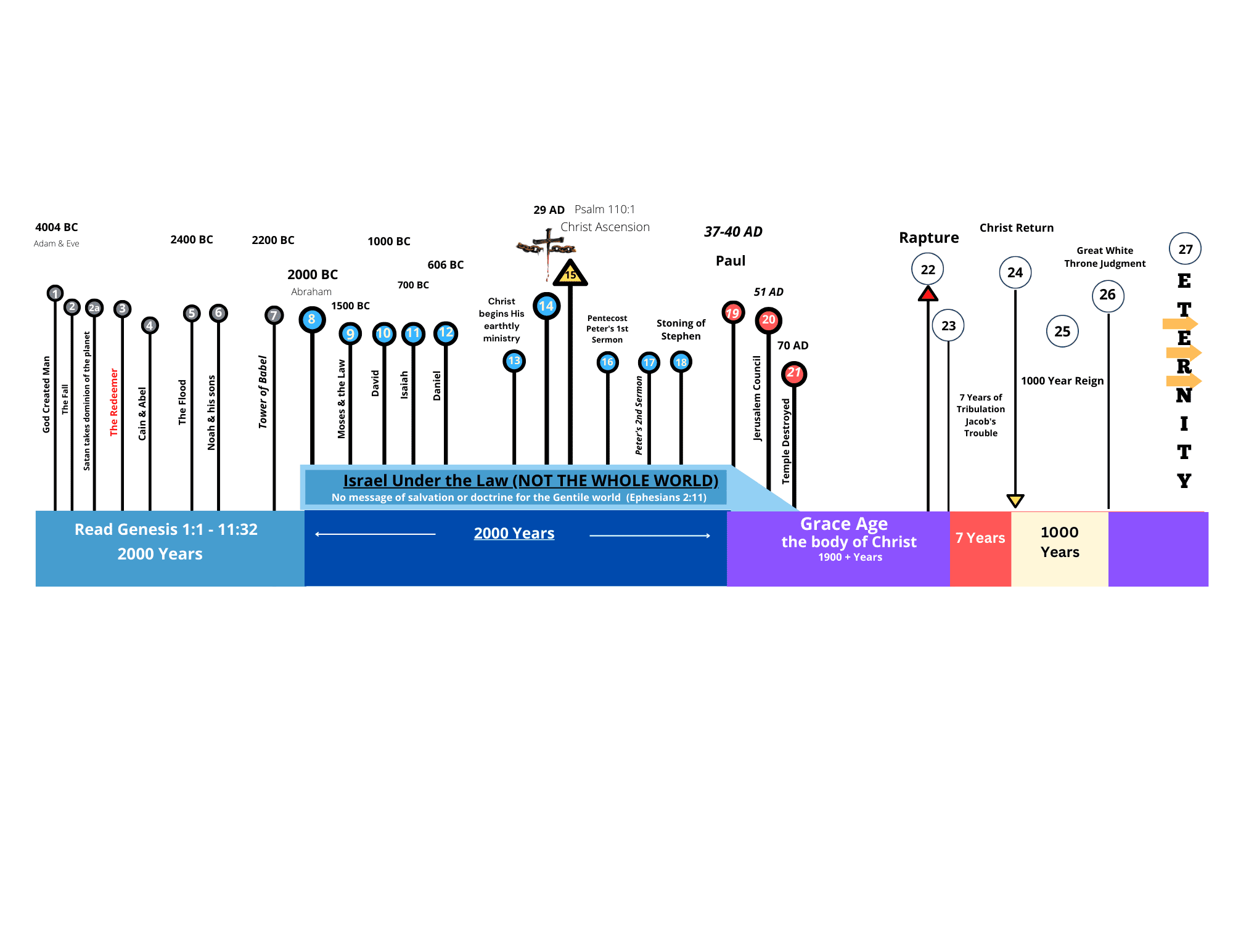
Understanding the context of Luke Chapter One is vital. Rather than rushing ahead to what was revealed to the apostle Paul, a common mistake in most of Christendom, it’s essential to grasp the Bible’s progressive revelation. Properly dividing the Word of Truth reveals a clear understanding, making the Bible both comprehensible and engaging. Attempting to force Paul’s revelations into the four gospels and early Acts causes confusion and division. By approaching the Scriptures with discernment and respecting their chronological unfolding, the richness of God’s message becomes apparent. Mixing God’s Word to fit a particular theology or denominational tradition can hinder the true unity within the body of Christ.
Luke initiates his gospel, breaking the 400 years of silence that followed Malachi’s last words. He picks up precisely where Malachi left off, emphasizing the continuity of Old Testament promises made to Israel, starting with Abraham. The closing verses of the Old Testament anticipate the arrival of someone to pave the way for the Lord. In continuity with this expectation, Luke opens with the angel Gabriel announcing to Zacharias, an elderly priest, that he and his wife will have a son. This son, in the spirit of Elijah the prophet, will turn the hearts of fathers to their children and prepare the way for the Lord. Luke establishes a seamless connection, presenting this son as the fulfillment of Malachi’s prophecy.
Malachi’s prophecy, like all Old Testament prophecies, is specifically addressed to and intended for the nation of Israel. This pattern remains consistent in Luke and the other gospels, with the focus remaining on Israel rather than the Gentile world.
Beloved, rest assured that God had the Gentile world in His divine plan from the very beginning. This was all part of God’s sovereign design, established before the beginning of time as we know it. God, in His sovereignty, knew that Israel would reject Him in unbelief, and He also foresaw the need to send His only Son, Jesus Christ, not only for the redemption of His chosen people but to reconcile the whole world to Himself (2 Corinthians 5:19). However, it’s crucial to approach the study of Luke and the four gospels by recognizing that Christ initially came to His people, the people of Israel. It’s essential not to impose Gentiles or the body of Christ into a timeframe or scriptural context where they do not belong.
Luke 1: The Old Testament Continued
The misconception that Luke or Matthew Chapter 1 marks the beginning of Christianity is incorrect. Instead, it is a continuation of God’s dealings with Israel based on Old Testament covenants and promises.
Christ’s imminent arrival, as announced by the angel in Luke 1, does not initially convey the message of faith alone in His death on the cross, His burial, and His resurrection as the means for salvation. It primarily signifies the fulfillment of God’s promise to the Nation of Israel, which is Israel’s King and a glorious kingdom. (Romans 15:8).
The Four Gospels, within this (literal-in-time) context, are predominantly Jewish. The nation of Israel is operating under the law, with the Temple functioning, sacrifices offered, and maintaining all 613 laws under Judaism. It is only later, through Paul, and not before, that the understanding of not being under the law is revealed and salvation to the Gentile world is offered. The Bible unfolds progressively, and Luke Chapter 1 serves as an introduction to Christ’s first Advent to the Nation of Israel as the promised King. Pastors and theologians commit great violence to God’s word when they force the body of Christ into Luke 1 or any of the four gospels. Yes, the four gospels are building blocks (Romans 15:4), but to teach Luke 1 as doctrine and salvation for the body of Christ is erroneous.
Luke 1:30–33 states, “And the angel said unto her, `Fear not, Mary, for thou hast found favour with God. And, behold, thou shall conceive in thy womb, and bring forth a son, and shalt call his name JESUS. He shall be great, and shall be called the Son of the Highest: and the Lord God shall give unto him the throne of his father David.'” This stems directly from Old Testament promises. Verses 67–74 of Luke 1 emphasize Zacharias’ prophetic blessing, centered on the Lord God of Israel (not the Gentiles) coming to Israel as promised throughout the Old Testament. To crush Israel’s enemies: Who were Israel’s enemies? The Gentiles), to be their King and to set up a glorious kingdom. With their Messiah, Jesus, ruling as King of kings from David’s throne in Jerusalem, again, Luke 1, and the entire book of Luke is a continuation of the Old Testament narrative, fulfilling promises made to the fathers (Abraham, Isaac, and Jacob).
Takeaway
As we study the New Testament, remember that the Lord’s first advent was to the lost sheep of the house of Israel (Matthew 10:5–6; Matthew 15:24), and Jesus was a minister of the circumcision to confirm promises made to the fathers (Romans 15:8). Acts 10 underscores the Jewish adherence to the law and Peter’s initial reluctance to embrace Gentiles. Lastly, in Acts 11:19, which is approximately 12 years after Pentecost, just after the stoning of Stephen, the Jewish believers (Jews who believed that Jesus was the Christ “Messiah”) are scattered because of Paul’s persecution. All that is being preached is the Old Testament (that Jesus was the Christ), AND TO WHO? JEWS ONLY.
Beloved, rest assured that God had the Gentile world in His divine plan from the very beginning. This was all part of God’s sovereign design, established before the beginning of time as we know it. God, in His sovereignty, knew that Israel would reject Him in unbelief, and He also foresaw the need to send His only Son, Jesus Christ, not only for the redemption of His chosen people but for the reconciliation of the entire world to Himself. However, it’s crucial to approach the study of Luke and the four gospels by recognizing that Christ initially came to His own people, the nation of Israel. It’s essential not to impose Gentiles or the body of Christ into a timeframe or scriptural context where they do not belong.
The progressive revelation unfolds, paving the way for God’s turning to the Gentiles through the Apostle Paul.
‘For whatever things were written before were written for our learning, that we through the patience and comfort of the Scriptures might have hope. ‘
Romans 15:4