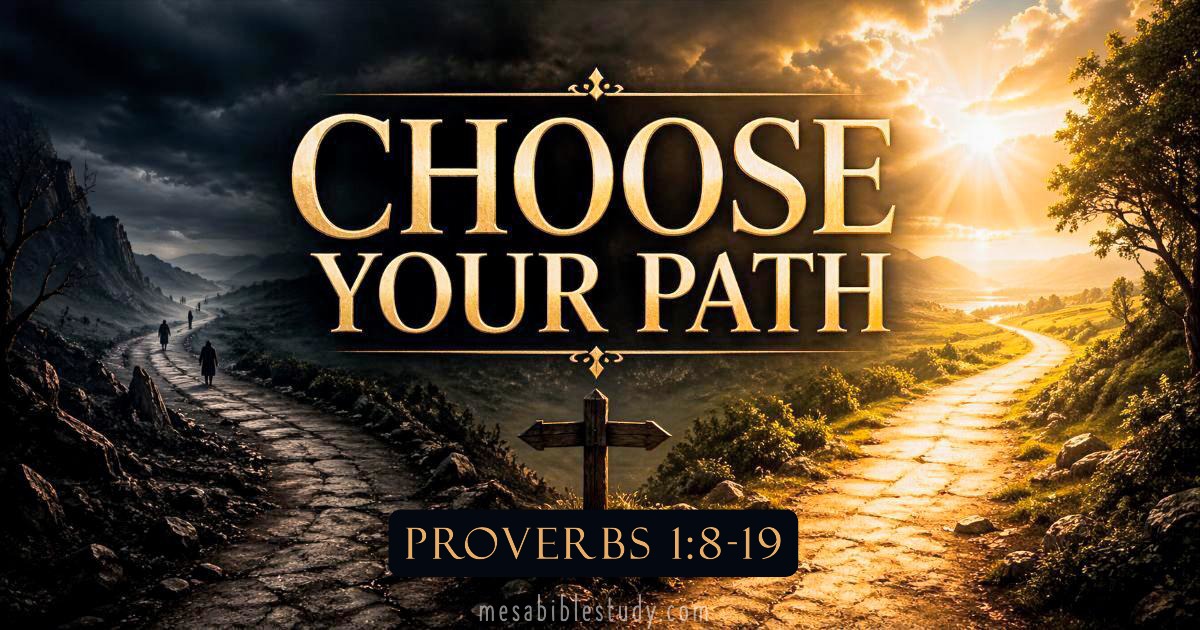
Proverbs 1:8–19
“My son, hear the instruction of your father,
And do not forsake the law of your mother;
For they will be a graceful ornament on your head,
And chains about your neck.
My son, if sinners entice you,
Do not consent.
If they say, ‘Come with us,
Let us lie in wait to shed blood;
Let us lurk secretly for the innocent without cause;
Let us swallow them alive like Sheol,
And whole, like those who go down to the Pit;
We shall find all kinds of precious possessions,
We shall fill our houses with spoil;
Cast in your lot among us,
Let us all have one purse’—
My son, do not walk in the way with them,
Keep your foot from their path;
For their feet run to evil,
And they make haste to shed blood.
Surely, in vain the net is spread
In the sight of any bird;
But they lie in wait for their own blood,
They lurk secretly for their own lives.
So are the ways of everyone who is greedy for gain;
It takes away the life of its owners.”
These verses begin the first direct warning in the book of Proverbs. After introducing the source and purpose of wisdom, Solomon now shows what wisdom must protect us from: the voice of sinners who entice others into evil. The warning begins in the home—with a father’s instruction and a mother’s law—and then moves outward to the pressure of corrupt companions.
This section is intensely practical. It shows how temptation works. Sin rarely introduces itself honestly. It appeals to belonging, shared gain, secrecy, excitement, and power. But Solomon strips away the attractive language and reveals the true end of the path: violence, greed, and self-destruction.
Chapter Theme
Proverbs 1 — The Beginning of Knowledge
Background and Flow of the Passage
Proverbs 1:1–7 established the source, purpose, and foundation of the book. Solomon identified himself as the human author, explained why Proverbs was written, and declared that the fear of the Lord is the beginning of knowledge.
Now Proverbs 1:8–19 shows the first practical outworking of wisdom: listening to godly instruction and refusing the enticement of sinners. The section begins with parental instruction as something beautiful and life-shaping, then immediately contrasts that with the destructive invitation of wicked men.
Phrase-by-Phrase Breakdown
v. 8 — “My son, hear the instruction of your father”
The chapter now becomes deeply personal.
The father speaks to his son directly and calls him to hear. This means more than listening with the ears. It means receiving instruction with humility and seriousness.
The word instruction carries the idea of discipline, correction, and guidance. This is not casual opinion. It is formative truth meant to shape the life.
v. 8 — “And do not forsake the law of your mother”
The mother’s role in instruction is honored alongside the father’s.
The law of your mother refers to her teaching, guidance, and wise direction. The son is not to forsake it—to neglect it, abandon it, or treat it lightly.
This shows that wisdom is meant to be learned in the home and passed down through faithful parental instruction.
Paul affirms this same truth when he writes:
Ephesians 6:1–2
“Children, obey your parents in the Lord, for this is right. ‘Honor your father and mother,’ which is the first commandment with promise:”
Notice Paul does not dismiss the importance of parental instruction under grace. He reinforces it. Children are told to obey their parents “in the Lord,” because “this is right.” God’s order for the home has not changed. Fathers and mothers are still given the responsibility to guide, instruct, correct, and encourage their children in the truth of God’s Word.
This matters greatly in the age we live in. Today, biblical family order is often mocked, dismissed as old-fashioned, or treated as oppressive. But God knows what is best for the family because He designed the family. A father’s instruction and a mother’s law are not meant to crush a child, but to guide them toward wisdom, restraint, discernment, and life.
And from a personal and practical standpoint, children do need that guidance. Even when they seem resistant, even when they act as though they do not want to hear anything about the Bible, the truth spoken in love has a way of staying with them.
Parents must be patient. We must continue in love and grace, not forcing truth harshly, but faithfully placing God’s Word before them.
Godly instruction, given with love, grace, patience, and consistency, can remain in the heart long after the moment has passed.
Proverbs 22:6
“Train up a child in the way he should go, And when he is old he will not depart from it.”
This is why the father’s instruction and the mother’s law in Proverbs 1:8 are so important. They are not simply household rules. They are a God-given covering, a moral compass, and a foundation of wisdom that can follow a child for the rest of his life.
🕊️
v. 9 — “For they will be a graceful ornament on your head, And chains about your neck”
Godly instruction is not a burden to resent but an adornment to value.
A graceful ornament and chains about your neck point to beauty, dignity, and honor. Wisdom received in the home shapes the life visibly. It beautifies conduct and strengthens character.
v. 10 — “My son, if sinners entice you, Do not consent”
Now the danger is named.
Sinners will entice—they will lure, persuade, and seek to draw the son into wrongdoing. The father does not say this danger might exist. He assumes it will.
The command is short and absolute: Do not consent. Do not agree inwardly. Do not yield. Do not join.
v. 11 — “If they say, ‘Come with us’”
This is how temptation often begins—with the appeal to belonging.
The enticement is not only to commit evil, but to join a group. Sin often gains power through companionship. It offers identity, acceptance, and shared action.
v. 11–12 — “Let us lie in wait to shed blood… Let us swallow them alive like Sheol”
The invitation is now exposed for what it is.
This is not harmless fun or youthful recklessness. It is violence, cruelty, and bloodshed. The sinners speak with shocking boldness because evil has hardened them.
Their words reveal how corrupt desire can grow when unchecked.
v. 13 — “We shall find all kinds of precious possessions, We shall fill our houses with spoil”
Now the motive is made clear: greed.
Violence is being justified by profit. The sinners promise gain, wealth, and spoil. This is one of sin’s oldest lies—that wickedness can bring reward without consequence.
v. 14 — “Cast in your lot among us, Let us all have one purse”
The appeal deepens.
Now the son is invited into shared participation and shared reward. He is told to join the group, cast in his lot, and profit with them.
This is how sin recruits: it offers belonging and shared gain.
v. 15 — “My son, do not walk in the way with them, Keep your foot from their path”
The father answers the invitation with a warning.
Do not walk with them. Do not even set your foot on their path. Wisdom says some roads must be refused entirely.
This is one of the great lessons of Proverbs: direction matters. A path leads somewhere.
v. 16 — “For their feet run to evil, And they make haste to shed blood”
These men are not drifting into sin. They are eager for it.
Their feet run to evil. They make haste to shed blood. Sin has become appetite, movement, and habit.
v. 17 — “Surely, in vain the net is spread In the sight of any bird”
This proverb-like statement introduces a comparison.
Even a bird has enough instinct to avoid an obvious trap. The implication is that the wicked act with less sense than the bird. They move toward destruction while imagining themselves clever.
v. 18 — “But they lie in wait for their own blood, They lurk secretly for their own lives”
This is the great reversal.
They think they are plotting against others, but in reality they are setting a trap for themselves. Evil recoils upon the evildoer.
v. 19 — “So are the ways of everyone who is greedy for gain; It takes away the life of its owners”
Now Solomon states the principle plainly.
This is not just about one violent group. It is the way of everyone who is greedy for gain. Greed destroys the very person who embraces it.
What looked profitable is shown to be fatal.
Doctrinal Summary
Proverbs 1:8–19 teaches that wisdom begins with hearing godly instruction and refusing the enticement of sinners. The home is presented as the first place where wisdom is learned, and the path of sinners is revealed as violent, greedy, and self-destructive.
This passage also shows that temptation works through persuasion, belonging, and promised gain. But sin never tells the truth about its own end. Wisdom sees past the invitation and recognizes the ruin waiting at the end of the path.
For believers today, this section remains urgently practical. It warns us not only against committing evil, but against joining ourselves to those who love it. Some paths are too dangerous to explore at all.
Final Summary
Proverbs 1:8–19 places two voices before the reader.
One is the voice of the father and mother—calling the son to wisdom, instruction, and honor.
The other is the voice of sinners—offering belonging, gain, and excitement, but leading into violence, greed, and ruin.
And the father’s counsel is unmistakable:
“My son, if sinners entice you, do not consent.”
That is the wisdom of the passage. Listen to the voice that leads to life. Refuse the path that promises gain but ends in destruction.