1 John 5:10 Explained — Believe God’s Testimony
1 John 5:10
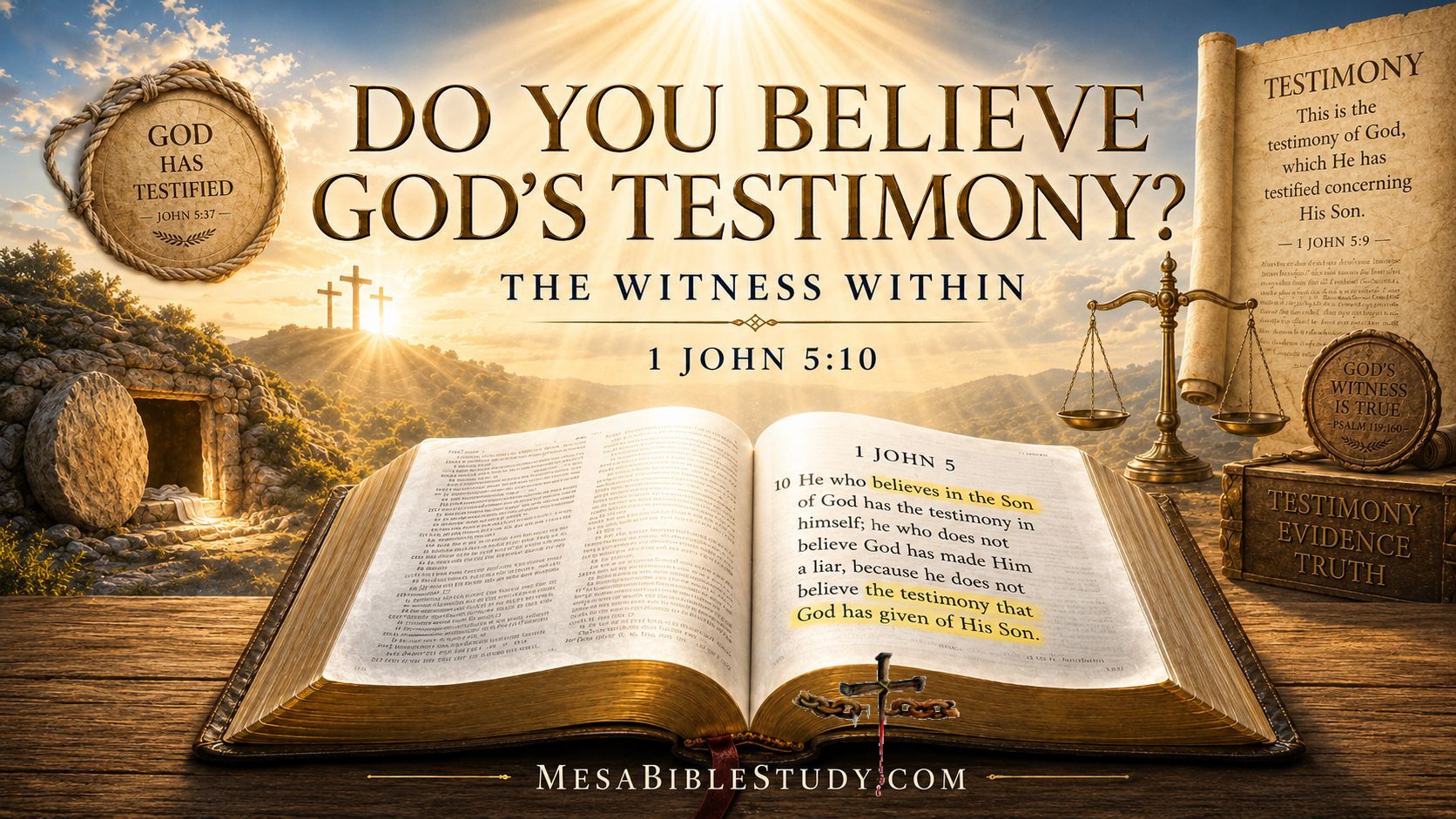
“He who believes in the Son of God has the witness in himself; he who does not believe God has made Him a liar, because he has not believed the testimony that God has given of His Son.
Introduction
First John 5:10 presents one of Scripture’s clearest contrasts between believing God and rejecting God’s testimony concerning His Son.
John does not describe faith as a vague belief in God, a general respect for Jesus, or an emotional religious experience. The issue is specific: Will a person believe the testimony God has given concerning His Son?
The person who believes in the Son of God has God’s witness within him. The person who refuses to believe God’s testimony does something far more serious than merely disagreeing with Christian doctrine. By rejecting what God has declared concerning His Son, that person treats God as though He were a liar.
The dividing line is therefore not religious sincerity, moral effort, church membership, or intellectual curiosity. The dividing line is whether a person believes God’s testimony concerning Jesus Christ.
Background, Setting, and Purpose
Who Wrote 1 John?
The apostle John wrote this epistle. He was one of the twelve apostles, an eyewitness of the earthly ministry, death, and resurrection of Jesus Christ.
John begins the letter by emphasizing that his testimony was not based on rumor, philosophical speculation, or secondhand tradition:
“That which was from the beginning, which we have heard, which we have seen with our eyes, which we have looked upon, and our hands have handled, concerning the Word of life.”
— 1 John 1:1
John had personally heard, seen, and touched the incarnate Son of God. His testimony concerning Christ was grounded in eyewitness reality.
To Whom Was It Written?
First John was written to Jewish believers who were being confronted by false teachers and deceivers. These teachers claimed spiritual knowledge while denying fundamental truths concerning the identity and work of Jesus Christ.
Some had separated themselves from the believing community:
“They went out from us, but they were not of us.”
— 1 John 2:19
John wrote to reassure genuine believers, expose false teaching, and reaffirm the truth concerning Jesus Christ.
When Was It Written?
First John was likely written near the end of the first century, during the later years of John’s ministry.
By that time, false doctrines concerning the person of Christ were spreading. Some denied that Jesus was truly the Christ. Others attempted to separate the divine Christ from the historical man Jesus.
John answered these errors by repeatedly emphasizing that Jesus Christ is the Son of God who truly came in the flesh.
Why Was It Written?
John states one of his central purposes near the conclusion of the letter:
“These things I have written to you who believe in the name of the Son of God, that you may know that you have eternal life.”
— 1 John 5:13
First John was written so that believers could possess assurance concerning eternal life and recognize the difference between truth and deception.
That assurance rests not upon human performance, changing emotions, or personal worthiness, but upon the testimony God has given concerning His Son.
Chapter Theme
The central theme of 1 John 5 is that faith in Jesus Christ, the Son of God, is the dividing line between life and death, truth and error, and belief and unbelief.
John begins the chapter by declaring:
“Whoever believes that Jesus is the Christ is born of God.”
— 1 John 5:1
He then identifies the victory that overcomes the world:
“And this is the victory that has overcome the world—our faith.”
— 1 John 5:4
John’s emphasis is not upon faith as an independent spiritual power. The value of faith is found in its object:
“Who is he who overcomes the world, but he who believes that Jesus is the Son of God?”
— 1 John 5:5
The chapter then moves from the believer’s faith to God’s testimony. Jesus Christ is not merely someone Christians have chosen to admire. God Himself has testified concerning His Son.
First John 5:10 stands at the center of that argument.
The Immediate Context
Immediately before verse 10, John contrasts human testimony with God’s testimony:
“If we receive the witness of men, the witness of God is greater; for this is the witness of God which He has testified of His Son.”
— 1 John 5:9
People regularly accept human testimony in courts, contracts, historical records, and ordinary conversation. Yet God’s testimony is infinitely greater because God cannot lie.
God has testified concerning His Son through the prophets, the earthly ministry of Christ, His miracles, His baptism, His resurrection, the Holy Spirit, and the apostolic witness.
The question is therefore not whether sufficient testimony has been given. The question is whether that testimony will be believed.
Verse 10 describes the response of two groups:
- The person who believes in the Son of God.
- The person who does not believe God.
The consequences of those responses could not be more different.
Phrase-by-Phrase Breakdown
1. “He who believes”
John begins with personal faith.
The expression “he who believes” describes an individual response to God’s testimony. No one is saved because of another person’s faith. Family background, religious heritage, or association with believers cannot replace personal belief.
Biblical faith is not merely acknowledging that Jesus existed. It is believing what God has revealed concerning Him.
Faith accepts God’s testimony as true.
This does not mean that faith is a work by which a person earns salvation. Faith is the opposite of earning. It is the empty hand that receives what God has provided through His Son.
The object of faith is not faith itself. The object of faith is Jesus Christ.
2. “In the Son of God”
John does not merely say that a person must believe “in God.” He specifically identifies the object of saving faith as the Son of God.
Many people claim to believe in God while rejecting God’s testimony concerning Jesus Christ. John does not allow that distinction.
To reject the Son is to reject the Father who sent Him:
“Whoever denies the Son does not have the Father either; he who acknowledges the Son has the Father also.”
— 1 John 2:23
God cannot be honored while His Son is rejected.
Jesus is not presented as one religious teacher among many. He is the Son of God, the promised Christ, and the One in whom eternal life is found.
John had already stated:
“And we have seen and testify that the Father has sent the Son as Savior of the world.”
— 1 John 4:14
Believing in the Son means accepting God’s testimony concerning who Jesus is and what God has accomplished through Him.
3. “Has the witness in himself”
The person who believes in the Son of God “has the witness in himself.”
John is describing an internal confirmation produced by receiving God’s testimony. What was externally proclaimed concerning the Son is received internally by faith.
This witness is not a private revelation that replaces Scripture. It is not an uncontrolled emotional impression, an audible voice, or an experience that allows a person to disregard the written Word of God.
The internal witness agrees with the external testimony God has already given.
The believer does not create this testimony. He receives it.
The Holy Spirit confirms the truth of God within the believer and produces assurance that the testimony concerning Christ is true. The believer has passed from hearing the testimony to personally possessing the life of which the testimony speaks.
This agrees with Paul’s statement:
“The Spirit Himself bears witness with our spirit that we are children of God.”
— Romans 8:16
The witness within is inseparably connected to faith in Christ and the truth God has revealed in His Word.
4. “He who does not believe God”
John now turns from the believer to the unbeliever.
Notice the wording carefully. John does not merely say, “He who does not believe in Jesus.” He says, “He who does not believe God.”
This is because the testimony concerning Jesus Christ originated with God.
Unbelief is not presented as a neutral position. It is a rejection of God’s own declaration concerning His Son.
A person may claim to respect God while denying that Jesus is the Son of God. John says that such a person does not truly believe God, because God has testified concerning His Son.
The issue is not whether someone possesses every possible answer to every theological question. The issue is whether he believes the testimony God has clearly given.
5. “Has made Him a liar”
No human being can actually cause God to become a liar. God is true and cannot lie.
John’s meaning is that the unbeliever treats God as though God’s testimony were false.
When God declares that Jesus is His Son and a person rejects that declaration, the person is effectively accusing God of giving false testimony.
This demonstrates the seriousness of unbelief.
Unbelief is often portrayed as an innocent lack of information or a harmless personal preference. Although people may have genuine questions, persistent rejection of God’s revealed testimony is not morally neutral.
It contradicts the God who cannot lie.
John uses similarly forceful language earlier in the epistle:
“He who says, ‘I know Him,’ and does not keep His commandments, is a liar, and the truth is not in him.”
— 1 John 2:4“Who is a liar but he who denies that Jesus is the Christ?”
— 1 John 2:22
Truth and falsehood meet at the person of Jesus Christ. What someone believes concerning the Son reveals whether he is receiving or rejecting God’s testimony.
6. “Because he has not believed”
John identifies the reason the unbeliever treats God as a liar: he has not believed.
The condemnation described in this verse is not based upon a failure to perform sufficient religious works. It is connected directly to unbelief.
God has spoken. God has testified. God has revealed His Son.
The unbeliever refuses to receive that testimony.
This agrees with the words of Jesus:
“He who believes in Him is not condemned; but he who does not believe is condemned already, because he has not believed in the name of the only begotten Son of God.”
— John 3:18
The fundamental issue is unbelief in the Son whom God has given.
7. “The testimony”
The word “testimony” carries the idea of witness or evidence given concerning a matter.
Christian faith is not presented as belief without testimony. God has provided testimony concerning His Son.
The Father testified concerning Christ at His baptism:
“This is My beloved Son, in whom I am well pleased.”
— Matthew 3:17
The works of Christ testified concerning Him:
“The very works that I do—bear witness of Me, that the Father has sent Me.”
— John 5:36
The Scriptures testified concerning Him:
“You search the Scriptures, for in them you think you have eternal life; and these are they which testify of Me.”
— John 5:39
The apostles testified concerning His resurrection:
“This Jesus God has raised up, of which we are all witnesses.”
— Acts 2:32
The gospel is therefore not human speculation. It is the proclamation of what God has revealed and accomplished through Jesus Christ.
8. “That God has given”
The testimony comes from God.
John is not asking his readers to place ultimate confidence in human religious authorities. The authority behind the testimony is God Himself.
God took the initiative.
God sent His Son.
God testified concerning His Son.
God raised Him from the dead.
God offers eternal life through Him.
Faith responds to what God has already done and declared.
The words “has given” also anticipate the following verse:
“And this is the testimony: that God has given us eternal life, and this life is in His Son.”
— 1 John 5:11
Eternal life is not earned, purchased, or achieved. It is given by God and found in His Son.
9. “Of His Son”
The entire testimony centers upon God’s Son.
Christianity is not ultimately centered upon a moral system, political program, religious institution, or human philosophy. It is centered upon the person and work of Jesus Christ.
God’s testimony is not merely that Jesus was a prophet, martyr, example, or reformer. He is God’s Son.
John wrote:
“And we know that the Son of God has come and has given us an understanding, that we may know Him who is true.”
— 1 John 5:20
The Son reveals the Father. The Son provides eternal life. The Son is the object of faith.
A person cannot separate eternal life from Jesus Christ because God has placed that life in His Son.
What This Verse Does Not Mean
It Does Not Mean That Personal Feelings Determine Truth
The “witness in himself” is not a license to make subjective feelings equal to divine revelation.
A person cannot claim that an inner impression from God contradicts the written Word of God. The internal witness confirms the testimony God has already revealed concerning His Son.
Truth remains grounded in God’s Word, not in human emotion.
It Does Not Mean That Faith Is Merely Intellectual Agreement
Believing in the Son involves more than admitting that certain historical facts are true.
Demons recognize realities concerning God, yet they do not possess saving faith.
Biblical faith receives God’s testimony and rests in His Son as the One through whom God gives eternal life.
It Does Not Mean That God Becomes a Liar
God cannot lie:
“In hope of eternal life which God, who cannot lie, promised before time began.”
— Titus 1:2
The unbeliever does not change God’s character. He treats God as though His testimony were untrue.
God remains true regardless of whether human beings believe Him.
It Does Not Mean That Sincerity Makes Every Belief Acceptable
A person can be sincere and still reject the testimony God has given concerning His Son.
Sincerity cannot transform falsehood into truth. The issue is not merely whether someone believes strongly, but whether he believes what God has revealed concerning Jesus Christ.
What This Verse Does Mean
First John 5:10 teaches that God has given a definite and authoritative testimony concerning His Son.
The person who believes (faith) in the Son receives that testimony and possesses its internal witness. The person who refuses to believe rejects God’s testimony and treats the truthful God as though He had spoken falsely.
There is no neutral territory in John’s argument.
God has testified that eternal life is found in His Son. To receive the Son is to receive life. To reject the Son is to reject the life God has provided.
The following verses make the conclusion unmistakable:
“And this is the testimony: that God has given us eternal life, and this life is in His Son. He who has the Son has life; he who does not have the Son of God does not have life.”
— 1 John 5:11–12
The contrast is absolute:
- The Son and life.
- No Son and no life.
- Believing God’s testimony.
- Rejecting God’s testimony.
- Receiving God as true.
- Treating God as though He were a liar.
Eternal life is not found in religion generally. It is found in God’s Son.
Cross-References for Going Deeper
John 3:16
“For God so loved the world that He gave His only begotten Son, that whoever believes in Him should not perish but have everlasting life.”
God gave His Son so that eternal life could be received through faith in Him.
John 3:36
“He who believes in the Son has everlasting life; and he who does not believe the Son shall not see life.”
The contrast between belief and unbelief is directly connected to the possession of eternal life.
John 5:24
“He who hears My word and believes in Him who sent Me has everlasting life.”
The believer possesses eternal life as a present reality.
John 20:31
“But these are written that you may believe that Jesus is the Christ, the Son of God.”
John’s written testimony was intended to lead people to faith in Jesus Christ.
Romans 3:4
“Indeed, let God be true but every man a liar.”
Human unbelief can never overturn the truthfulness of God.
1 Corinthians 15:1–4
Paul identifies the gospel by which believers are saved: Christ died for our sins, was buried, and rose again the third day according to the Scriptures.
God’s testimony concerning His Son includes the completed work through which salvation is now proclaimed.
Ephesians 1:13
“In Him you also trusted, after you heard the word of truth, the gospel of your salvation.”
The believer hears the truth, believes the gospel, and is sealed with the Holy Spirit of promise.
Titus 1:2
“God, who cannot lie.”
The assurance of eternal life rests upon the unchanging character of the God who gave the promise.
Doctrinal Summary
First John 5:10 teaches that faith in the Son of God is a response to God’s own testimony.
God has testified concerning Jesus Christ. He has declared that Jesus is His Son and that eternal life is found in Him.
The person who believes receives God’s testimony as true and possesses the witness of that testimony within himself. The person who refuses to believe does not merely reject a human religious claim. He contradicts God’s testimony and treats God as though He were a liar.
The verse establishes several important truths:
- God is the source of the testimony.
- Jesus Christ is the subject of the testimony.
- Faith receives the testimony.
- Unbelief rejects the testimony.
- Eternal life is found in the Son.
- Assurance rests upon God’s truthfulness, not human performance.
For believers living in the present dispensation of grace, the saving work of the Son is proclaimed plainly in Paul’s gospel:
“Christ died for our sins according to the Scriptures, and that He was buried, and that He rose again the third day according to the Scriptures.”
— 1 Corinthians 15:3–4
Salvation is not obtained through religious works, law-keeping, ceremonies, or human merit. It is received by trusting, believing—faith in the gospel of the grace of God and resting in the finished work of Jesus Christ.
Final Summary
First John 5:10 confronts every reader with a direct question: Will you believe the testimony God has given concerning His Son?
The believer receives that testimony and has the witness within himself. The unbeliever rejects God’s testimony and, by doing so, treats God as though He were a liar.
God has not left humanity without testimony. He sent His Son, testified concerning Him, raised Him from the dead, and declared that eternal life is found in Him.
The issue is not whether God has spoken clearly.
The issue is whether His testimony will be believed.
God is true.
His testimony is certain.
His Son is sufficient.
And eternal life is found in Him.