The Background of Paul’s Words in 2 Corinthians 1:3–11

The Background of Paul’s Words in 2 Corinthians 1:3–11

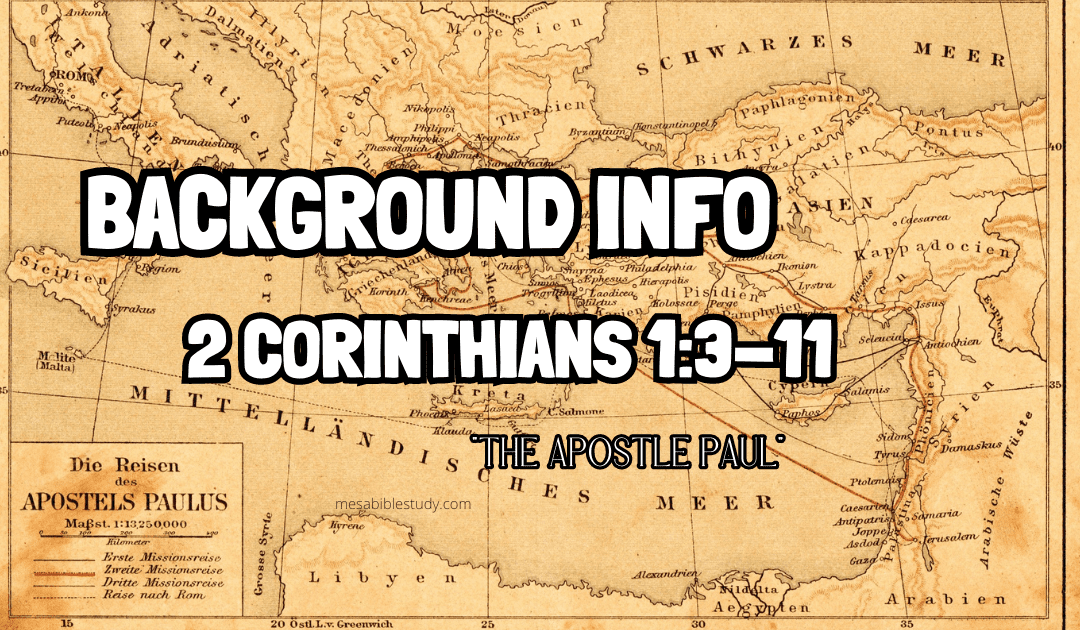
Understanding the context and setting of Bible passages and books is crucial. In 2 Corinthians chapter one, we see that even the great apostle Paul experienced suffering throughout his ministry, yet he found comfort and strength in God’s amazing grace. Inspired by the Holy Spirit, Paul penned these powerful words, which have provided comfort and strength to millions of believers since their inception.


In 2 Corinthians 1:3–11, the apostle Paul is referring to the intense trials and tribulations he faced during his ministry. Although the specific circumstances of these trials are not explicitly detailed in this passage, we know from Paul’s other writings and the book of Acts that he experienced various forms of persecution and suffering throughout his missionary journeys.


Paul was chosen by God to be the apostle to the Gentiles. Paul and Paul alone were given the gospel of grace and the doctrine for the body of Christ by the ascended and glorified Lord Jesus around 37-40 AD. The apostle Paul preached the gospel of grace not the gospel of the kingdom for approximately 25 years.


The apostle Paul’s hardships included imprisonment (Acts 16:23-24), beatings (2 Corinthians 11:24-25), and even a stoning that left him for dead (Acts 14:19). He also faced opposition and false accusations from both Jews and Gentiles (Acts 13:50; 2 Corinthians 11:26), as well as life-threatening dangers such as shipwrecks (Acts 27:41-44) and plots against his life (Acts 23:12-15).


In 2 Corinthians 1:8-9, Paul describes an incident in Turkey (Asia Minor), likely in Ephesus (Acts 19), where he faced such severe persecution that he “despaired even of life” and felt the “sentence of death.” Despite the overwhelming trials, Paul recognized that God allowed these difficulties to teach him and the Corinthians to rely solely on God’s power and not their own strength (2 Corinthians 1:9-11).


Paul’s experiences taught him to rely fully on God’s grace and power. In 2 Corinthians 12:9, Paul shares a revelation he received from God: “My grace is sufficient for thee: for my strength is made perfect in weakness.” Despite the hardships, Paul’s recognized that God’s grace was sufficient, and he glorified God through his weakness, recognizing that God’s grace was all he needed.


Like Paul, believers today may face various trials and difficulties. However, we can find comfort in knowing that God’s grace is sufficient for us in every situation. By relying on God’s strength and grace, we can persevere and triumph over adversity, glorifying Him in our weakness.


The God of All Comfort


‘Blessed be the God and Father of our Lord Jesus Christ, the Father of mercies and God of all comfort, who comforts us in all our tribulation, that we may be able to comfort those who are in any trouble, with the comfort with which we ourselves are comforted by God. For as the sufferings of Christ abound in us, so our consolation also abounds through Christ. Now if we are afflicted, it is for your consolation and salvation, which is effective for enduring the same sufferings which we also suffer. Or if we are comforted, it is for your consolation and salvation. And our hope for you is steadfast, because we know that as you are partakers of the sufferings, so also you will partake of the consolation.’

II Corinthians 1:3-7


https://mesabiblestudy.com/the-god-of-all-comfort-2-corinthians-13-7-part-1-of-3/



The God of All Comfort – (2 Corinthians 1:3-7) Part 1 of 3

The God of All Comfort – (2 Corinthians 1:3-7) Part 1 of 3

In times of great difficulties, pain, and uncertainty, believers can find comfort and strength in the words of 2 Corinthians 1:3-7.


‘Blessed be the God and Father of our Lord Jesus Christ, the Father of mercies and God of all comfort, who comforts us in all our tribulation, that we may be able to comfort those who are in any trouble, with the comfort with which we ourselves are comforted by God. For as the sufferings of Christ abound in us, so our consolation also abounds through Christ. Now if we are afflicted, it is for your consolation and salvation, which is effective for enduring the same sufferings which we also suffer. Or if we are comforted, it is for your consolation and salvation. And our hope for you is steadfast, because we know that as you are partakers of the sufferings, so also you will partake of the consolation.’


These powerful words remind us that our God is the source of all comfort and mercy. No matter the challenges this world may place on believers, God’s comforting presence is always with us.


As we experience His grace which is sufficient (And He said to me, “My grace is sufficient for you, for My strength is made perfect in weakness.” 2 Corinthians 12:9) for us to overcome life’s toughest of situations. And in turn, we can share this grace, hope, and encouragement with others facing difficulties.


Consolation to Endure


Though we may face hardships, the comfort we receive through Christ is greater still. As the apostle Paul writes in verse five, “For as the sufferings of Christ abound in us, so our consolation also aboundeth by Christ.”


In our struggles, we can be confident that the Lord is with us, providing strength and consolation to endure. As we walk through the trials and tribulations of life, let us cling to the promise that God is the “God of all comfort.” May we find strength in His presence, knowing that He is with us, and allow His compassion and grace to overflow into the lives of others, offering hope and encouragement in a broken world.


Stay tuned for Part 2 of this devotional series, titled “The Comforting Power of the Gospel,” where we’ll delve into 2 Corinthians 1:8-11 and discover thy why, how, and what exactly it is that gives believers comfort!


God of all comfort 2 Corinthians 13-7

The Power of the Tongue: The Highest Good and Greatest Harm

The Power of the Tongue: The Highest Good and Greatest Harm

‘Death and life are in the power of the tongue, And those who love it will eat its fruit.’

Proverbs 18:21


Proverbs 18:21 tells us that the tongue has the power of life and death. The words we use have a tremendous impact on ourselves and those around us. We can use our words to bring encouragement, comfort, and healing, or we can use them to tear down, criticize, and hurt others. As Christians, we should strive to use our words for good and to build others up.


The apostle Paul echoes this sentiment in his letter to the Ephesians. In Ephesians 4:29, he instructs believers to only speak words that are good for building others up according to their needs, so that it may benefit those who listen. In Colossians 4:6, Paul urges us to let our conversations be full of grace, seasoned with salt, so that we may know how to answer everyone.


The Bible teaches that our words reflect the condition of our hearts. If our hearts are filled with love, joy, peace, and goodness, our words will reflect these things. However, if our hearts are filled with anger, bitterness, jealousy, and hatred, our words will reflect these negative traits.


As believers, we must strive to use our words to build up others and to speak the truth, the truth of the gospel into their situations. We are admonished to avoid negative speech, gossip, and slander. Instead, we are encouraged to, bless, and uplift others with our words. Let us be mindful of the power of our words and use them to bring glory to God and to be a blessing to others.


Here are verses from the Apostle Paul that parallel the message of Proverbs 18:21:

Get your Bible our and study these passages!

“Let your speech always be gracious, seasoned with salt, so that you may know how you ought to answer each person.” – Colossians 4:6

“Let no corrupting talk come out of your mouths, but only such as is good for building up, as fits the occasion, that it may give grace to those who hear.” – Ephesians 4:29

“Therefore, having put away falsehood, let each one of you speak the truth with his neighbor, for we are members one of another.” – Ephesians 4:25

“Let all bitterness and wrath and anger and clamor and slander be put away from you, along with all malice. Be kind to one another, tenderhearted, forgiving one another, as God in Christ forgave you.” – Ephesians 4:31-32


All of these verses emphasize the importance of speaking in a way that builds up others, rather than tearing them down. They also emphasize the importance of speaking truthfully and avoiding falsehood, as well as avoiding bitterness, anger, and slander. By using our words in a positive and uplifting way, we can make a positive impact on those around us and bring glory to God.


Even more Bible verses that support this theme include Proverbs 15:4, Proverbs 12:18, Matthew 12:36-37, James 3:5-6, James 1:26, Colossians 4:6, Ephesians 4:29, 1 Peter 3:10, and Philippians 4:8.

You nice words to lift up and not tear down


Finding Peace and Truth in a Chaotic, Deceptive World

Finding Peace and Truth in a Chaotic, Deceptive World

Therefore do not worry about tomorrow, for tomorrow will worry about itself. Each day has enough trouble of its own.

 Matthew 6:34


In a world gripped by chaos and deception, including ongoing wars and rumors of wars, failing economies, famine, flooding, volcanic eruptions, disease, death, the decline of the church, and the spread of false teachings, it’s easy to become overwhelmed and worried about the future. Amidst these difficult times, Jesus reminds us in Matthew 6:34 to focus on the present, trusting God to handle our tomorrows.


As we embrace today, we can find comfort in Psalm 46:1, which assures us that “God is our refuge and strength, an ever-present help in trouble.” Despite the turmoil around us, God is with us, providing the strength and guidance we need to face each day’s challenges.


The Apostle Paul also encourages us in Philippians 4:6 to bring our concerns to God through prayer: “Do not be anxious about anything, but in every situation, by prayer and petition, with thanksgiving, present your requests to God.”


In the midst of world chaos, let us remember to trust in God’s presence and providence each day. God has given us not only our greatest comfort but also the only weapon that can defeat the snares of the god of this world, Satan: the Bible, His Word. Studying the Bible daily is essential, as it must be our only source of truth in this cursed world filled with deception and lies. By focusing on the present, seeking God’s guidance, and relying on His Word, we can experience peace and joy, knowing that He is not only in control of our present but of our tomorrow.


The Four Common Beliefs Regarding End Times Bible Prophecy

The Four Common Beliefs Regarding End Times Bible Prophecy

There are four common sets of beliefs regarding end-times prophecy: amillennial and three pre-millennial beliefs which are post-tribulational rapture, mid-tribulation rapture, and pre-tribulation rapture.


On the other hand, the belief of Amillennialists is in complete opposition to the word of God when it comes to end-time events. Amillennialists reject the idea of a literal rapture and the belief in a future tribulation period. The amillennialists’ view calls God a liar.


Important Note:

The timing of the rapture is a hot topic among believers. Unfortunately, some believers can let their pride and emotions get the better of them, which is not in line with what God wants for us. However, it’s important to remember that there are many believers who have faith in the death, burial, and resurrection of Jesus Christ, but interpret the timing of the rapture differently, such as a post-tribulation or mid-tribulation rapture. They are still part of the body of Christ and should not be considered anything but, just because they have a different interpretation of the timing of the rapture. We have to be able to sit down and demonstrate how we come to our conclusions on the timing of the rapture from scripture.


The Rapture Revealed to Paul


Before exploring the various perspectives, let’s first examine the Bible passages where the Apostle Paul describes the rapture. This event was a secret, known only to God, until it was revealed to Paul. In 1 Thessalonians 4:13-18 and 1 Corinthians 15:51-55, Paul provides a clear explanation of the rapture.


‘Behold, I tell you a mystery: We shall not all sleep, but we shall all be changed— in a moment, in the twinkling of an eye, at the last trumpet. For the trumpet will sound, and the dead will be raised incorruptible, and we shall be changed. For this corruptible must put on incorruption, and this mortal must put on immortality. So when this corruptible has put on incorruption, and this mortal has put on immortality, then shall be brought to pass the saying that is written: “Death is swallowed up in victory.” “O Death, where is your sting? O Hades, where is your victory?”’

I Corinthians 15:51-55

‘But I do not want you to be ignorant, brethren, concerning those who have fallen asleep, lest you sorrow as others who have no hope. For if we believe that Jesus died and rose again, even so God will bring with Him those who sleep in Jesus. For this we say to you by the word of the Lord, that we who are alive and remain until the coming of the Lord will by no means precede those who are asleep. For the Lord Himself will descend from heaven with a shout, with the voice of an archangel, and with the trumpet of God. And the dead in Christ will rise first. Then we who are alive and remain shall be caught up together with them in the clouds to meet the Lord in the air. And thus we shall always be with the Lord. Therefore comfort one another with these words.’

I Thessalonians 4:13-18


The catching up of the body of Christ into the clouds that Paul describes in 1 Thessalonians 4:17 is the event that is commonly referred to as “the rapture”. At some future time, the trumpet will sound, and we who are alive will be caught up in the clouds to meet those who have died in Christ and our Lord Jesus Christ in the air. The dead in Christ will be resurrected into their immortal bodies first immediately followed by believers that remain alive. Then we all shall be with our Lord forever. What an amazing hope…Our Blessed Hope!


Now let’s look at the different viewpoints about the rapture and end times prophecy:


  1. Amillennialists believe that God’s promises regarding the end times are figurative and will not be literally fulfilled, particularly the 1000-year reign of Jesus Christ on the earth.
  2. Pre-millennialists believe that Jesus Christ will return to the earth prior to His literal reign on the earth for 1000 years. Three groups of pre-millennialists include the following:


a. Post-tribulationists believe that the rapture will not occur until the end of the seven-year tribulation, just prior to the beginning of the millennial kingdom.

b. Mid-tribulationists believe that the rapture will occur three and one-half years into the tribulation, at the beginning of the three-and-one-half-year great tribulation.

c. Pre-tribulationists believe that the rapture will occur prior to the seven-year tribulation, but not necessarily immediately before the tribulation.