by Jamie Pantastico | Jun 22, 2023 | Daily Encouragement |
1 Corinthians 2:1-5
And I, brethren, when I came to you, did not come with excellence of speech or of wisdom declaring to you the testimony of God. For I determined not to know anything among you except Jesus Christ and Him crucified. I was with you in weakness, in fear, and in much trembling. And my speech and my preaching were not with persuasive words of human wisdom, but in demonstration of the Spirit and of power, that your faith should not be in the wisdom of men but in the power of God.
In a world that values eloquent speech, high production, and human wisdom, the apostle Paul reminds us that true power and transformation reside in our reliance on God’s wisdom rather than the wisdom of men. When Paul ministered in Corinth, he did not use persuasive words, high production and human wisdom (it was just Paul and the gospel of grace), choosing to focus solely on Jesus Christ and His sacrificial death on the cross (1 Corinthians 2:2). His approach was marked by weakness, fear, and trembling, demonstrating that true power is found in the demonstration of the Spirit’s work (1 Corinthians 2-4).
Then Paul admonishes us in verse 5; that our faith “should” NOT come from the wisdom of men (or anything the world has to offer) but in the power of God. Read 1 Corinthians 2:5 below;
‘that your faith should not be in the wisdom of men but in the power of God.’
I Corinthians 2:5
And where does the power of God culminate? What is the power of God that transforms hearts, defeats sin, the law, Satan, and death itself? The Gospel. The finished work of the cross… Read on.
For I am not ashamed of the gospel of Christ, for it is the power of God to salvation for everyone who believes, for the Jew first and also for the Greek.
Romans 1:16
Religion is Behavior Modification – Christianity is Heart Transformation

by Jamie Pantastico | Jun 21, 2023 | Daily Encouragement |
1 John 4:7-11
Beloved, let us love one another, for love is of God; and everyone who loves is born of God and knows God. He who does not love does not know God, for God is love. In this the love of God was manifested toward us, that God has sent His only begotten Son into the world, that we might live through Him. In this is love, not that we loved God, but that He loved us and sent His Son to be the propitiation for our sins. Beloved, if God so loved us, we also ought to love one another.
As believers, we are predestined recipients of extraordinary love—the love that pours from the very essence of God Himself. We are called to love one another (all people, not just other believers), for love finds its source in God. It is through love that we demonstrate our connection to Him and our understanding of His character.
The pinnacle of God’s love was revealed in the work of the cross. In His boundless love, God sent His only Son to bear the weight of our sins, providing us with the opportunity to experience eternal life through Him. This sacrificial act epitomizes the true nature of love—unconditional, selfless, and without measure.
We must grasp the profound truth that our love for God did not initiate this divine love; rather, it was God who first loved us. His love reaches beyond our merits, flaws, and shortcomings. As recipients of such incomprehensible love, we are compelled to reflect it in our relationships with one another.
Let us embrace the reality of God’s love and allow it to overflow into our lives (and we do this by studying His word daily). May His sacrificial love be our motivation to love one another (Galatians 2:20), and to extend grace, forgiveness, and compassion. By doing so, we become living testaments to the (heart) transformative power of Christ’s love at work within us.

by Jamie Pantastico | Jun 19, 2023 | Daily Encouragement |
Father’s Day is a special occasion to honor and appreciate the fathers in our lives. As we celebrate fatherhood, it is important to reflect on the profound impact fathers have on their children. Here are five encouraging Bible verses that convey appreciation for fathers on any day of the week. These verses offer insights into the significance of fatherhood and provide a source of inspiration for celebrating and honoring fathers. Get out your Bible and dive into the heartwarming words of Scripture and discover how they relate to the joyous celebration of fatherhood.
God’s will for fathers is made crystal clear in Ephesians 6:4…
Ephesians 6:4
And you, fathers, do not provoke your children to wrath, but bring them up in the training and admonition of the Lord.
1. Proverbs 23:24 The father of the righteous will greatly rejoice, and he who begets a wise child will delight in him.
Takeaway: This verse highlights the joy and delights a father experiences when his child walks in righteousness and wisdom. It acknowledges the profound happiness and pride a father feels when his child reflects godly values and makes wise choices.
2. Psalm 103:13 As a father pities his children, so the LORD pities those who fear Him.
Takeaway: This verse compares the compassionate nature of a father to that of our heavenly Father. It reminds fathers of the importance of showing love, care, and empathy towards their children, mirroring the compassionate heart of God.
3. 1 Corinthians 16:14 Let all that you do be done with love.
Takeaway: Love is the foundation of fatherhood. This verse encourages fathers to let love guide their actions, decisions, and interactions with their children. It reminds them that love is the driving force behind effective and meaningful fatherhood.
4. Ephesians 6:4 And you, fathers, do not provoke your children to wrath, but bring them up in the training and admonition of the Lord.
Takeaway: Fathers have a responsibility to nurture and guide their children in the ways of the Lord. This verse encourages fathers to provide a loving and supportive environment, where their children can grow in faith and character, avoiding actions or words that could cause anger or discouragement.
5. Proverbs 20:7 The righteous man walks in his integrity; his children are blessed after him.
Takeaway: A father’s righteous living (not perfect but godly in all aspects of life) and integrity have a lasting impact on his children’s lives. This verse acknowledges the blessings that follow in the footsteps of a father who walks in godliness. It encourages fathers to be role models of righteousness and virtue, leaving a positive legacy for their children to inherit.
Happy Father’s Day

by Jamie Pantastico | Jun 18, 2023 | Daily Encouragement |
Ephesians 6:4
And you, fathers, do not provoke your children to wrath, but bring them up in the training and admonition of the Lord.
Fathers, πατέρες (pateres)
Noun – Vocative Masculine Plural
Strong’s 3962: Father, (Heavenly) Father, ancestor, elder, senior. Apparently a primary word; a ‘father’.
In this verse, the apostle Paul provides a clear instruction to fathers, highlighting the crucial role we play in the upbringing of their children. The phrase “in the training and admonition of the Lord” carries profound significance. It emphasizes the paramount importance of teaching our children about the Lord Jesus Christ and the sacrificial love He displayed on the cross.
As fathers, we have a responsibility to be examples to our children by reflecting the same sacrificial love that the Lord Jesus demonstrated. Our love should be selfless, patient, and compassionate, mirroring Christ’s sacrificial love. It is through this love that we can guide our children, teaching them the ways of the Lord and instilling in them a firm foundation of faith.
By embracing our role as fathers and embodying Christ’s sacrificial love, we create an environment that nurtures spiritual growth and development in our children. We must seize opportunities to teach them about God’s love, grace, and forgiveness, ensuring they understand the depth of Christ’s sacrifice on the cross.
As fathers, we are called to diligently train and admonish our children, not out of anger or harshness, but with the gentle guidance and compassion of the Lord. Our aim is to nurture their hearts, minds, and souls, leading them closer to God and preparing them to navigate life’s challenges with faith and wisdom.
Fulfilling the will of the Lord as described in Ephesians 6:4 requires a steadfast commitment to teaching, loving, and encouraging our children in the ways of the Lord. As we demonstrate sacrificial love, provide biblical instruction, and offer unwavering support, we empower our children to grow in their relationship with God and walk in His truth.
May every father embrace the calling to lead their children in the training and admonition of the Lord. Through the grace of God and the guidance of His Word, let us strive to be the fathers our children need, exemplifying the sacrificial love of Christ and pointing them toward a life of faith, hope, and purpose.
Happy Father’s Day
Please consider sharing this post.

by Jamie Pantastico | Jun 16, 2023 | Daily Encouragement |
There are three chapters in the New Testament that so clearly point out that there were two gospels that the only way you can’t see it is to deny God’s word. Here are the three: Acts chapter 15 and Galatians chapters 1 and 2. Take some time to read through these chapters more than once and you see the clear distinction between what Peter and the 11 preached and what the apostle Preached. Again, it is so graphically clear that Peter and Paul did not preach the same message that the only way not to see it is to deny what God has so plainly revealed and cling to tradition.
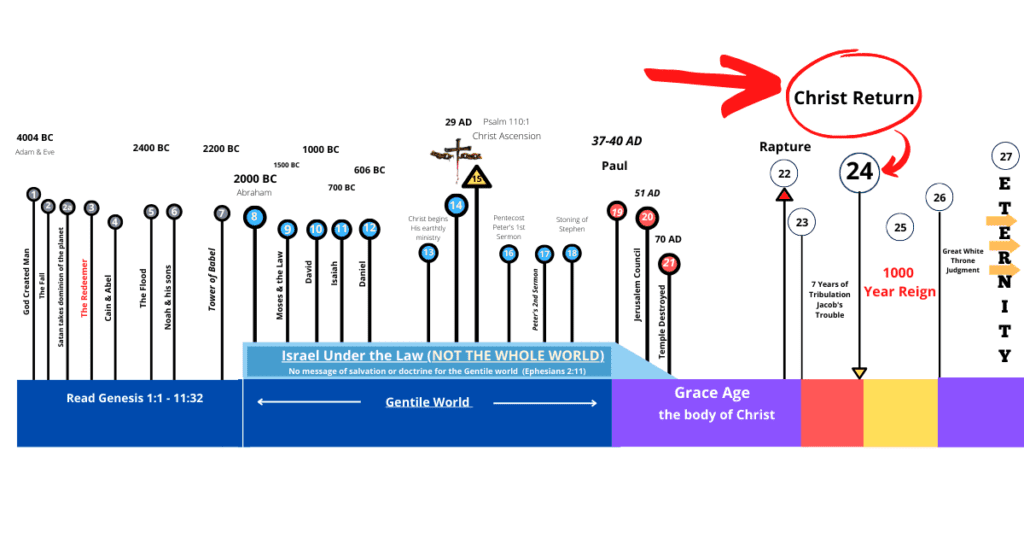
The Bible indeed presents a distinction between the gospel of the kingdom, which Jesus and the twelve disciples preached, and the gospel of the grace of God, proclaimed by the apostle Paul. To understand this distinction, let’s explore the chronological progression from Old Testament prophecy to the preaching of the gospel of grace.
1. Old Testament Prophecy and the Promised Kingdom:
In the Old Testament, God made a covenant with Abraham (Genesis 12:1-3) and promised that through him, all the nations would be blessed. This promise included a future kingdom with the Son of God, Jesus Christ, ruling as King over the earth (2 Samuel 7:12-13; Isaiah 9:6-7; Jeremiah 23:5-6; Zechariah 14:9).
2. Israel’s Rejection of Jesus as the Messiah:
Jesus Christ came as the promised Messiah to fulfill the prophecies (given to Abraham, Isaac, Jacob, and David), proclaim the kingdom of God, and offer salvation to Israel. However, the majority of the Jewish leadership and the people (the nation of Israel as a whole) rejected Him as their Messiah, which ultimately led to His crucifixion. The peak of the nation of Israel’s rejection (in unbelief) culminated in the stoning of Stephen (Acts 7). This marked a turning point (predetermined) in God’s dealing with Israel (Romans 11:32; and all of Romans 11 make it so clear that God is not done with Israel and has temporarily blinded the nation as a whole).
3. God’s (Predetermined) Focus Shifts to the Gentiles:
‘For God has committed them (them is Israel) all to disobedience, that He might have mercy on all.’
Romans 11:32
Following Israel’s rejection, God turned His attention to the Gentiles, selecting the apostle Paul as the chosen vessel to bring the gospel to them (Acts 9:15; Galatians 2:7-9). This marked a new phase (predetermined and “mystery or secret” hidden in the mind of God since the world began; Romans 16:25) in God’s redemptive plan.
4. The Gospel of the Kingdom:
‘Then Jesus went about all the cities and villages, teaching in their synagogues, preaching the gospel of the kingdom, and healing every sickness and every disease among the people. ‘
Matthew 9:35
‘These twelve Jesus sent out and commanded them, saying: “Do not go into the way of the Gentiles, and do not enter a city of the Samaritans. But go rather to the lost sheep of the house of Israel. And as you go, preach, saying, ‘The kingdom of heaven is at hand.’ Heal the sick, cleanse the lepers, raise the dead, cast out demons. Freely you have received, freely give. ‘
Matthew 10:5-8
The gospel of the kingdom, preached by Jesus and the twelve disciples, centered on proclaiming the imminent arrival of the promised kingdom of God and the need for repentance and faith in Jesus as the Messiah (the Christ) (Matthew 4:17; 10:5-7; Mark 1:14-15). This gospel was primarily directed to the nation of Israel with only two Gentile exceptions made by the Lord Jesus Himself; the Roman centurion and the Canaanite woman.
5. The Gospel of the Grace of God:
‘Moreover, brethren, I declare to you the gospel which I preached to you, which also you received and in which you stand, by which also you are saved, if you hold fast that word which I preached to you—unless you believed in vain. For I delivered to you first of all that which I also received: that Christ died for our sins according to the Scriptures, and that He was buried, and that He rose again the third day according to the Scriptures, ‘
I Corinthians 15:1-4
‘But none of these things move me; nor do I count my life dear to myself, so that I may finish my race with joy, and the ministry which I received from the Lord Jesus, to testify to the gospel of the grace of God.’
Acts 20:24
The gospel of the grace of God, which Paul preached, emphasized the finished work of the cross; the death, burial, and resurrection of Jesus Christ (1 Corinthians 15:1-4; Acts 20:24) as the means of salvation. It highlighted that salvation is by grace through faith alone, apart from adherence to the Mosaic law and temple worship (Acts 13:38-39; Ephesians 2:8-9). These were new revelations not given to Peter and the eleven but to Paul alone (Galatians 1:11,12; Ephesians 3:1-6). Before the gospel of grace, there was no gospel “Good News” message to the Gentile world (Ephesians 2:11,12,13; Romans 16:25).
The transition from the gospel of the kingdom to the gospel of the grace of God occurred as God turned His focus from the nation of Israel to the Gentiles. This shift was prompted by Israel’s rejection of Jesus as their promised Messiah (predetermined/it was the mystery hidden in the mind of God). The apostle Paul was God’s divinely chosen vessel to proclaim the gospel of grace to the Gentile world (Acts 9:15; Romans 11:13). And it is by the gospel revealed to Paul by which all mankind will be judged at the Great White Throne (Romans 2:16; Revelation 20:11-12).
‘But the Lord said to him, “Go, for he is a chosen vessel of Mine to bear My name before Gentiles, kings, and the children of Israel. ‘
Acts 9:15
‘in the day when God will judge the secrets of men by Jesus Christ, according to my gospel.’
Romans 2:16
6. Back to the Gospel of the Kingdom during the 7 Years of Tribulation
After the rapture takes place, the Age of Grace will have ended. The Anti-Christ will come on the scene to sign a seven-year peace treaty to kick off the seven years of tribulation. Next, the two witnesses will come to the nation of Israel, and out of their ministry will come 144,000 young Jewish men who will be preaching the Gospel of the Kingdom around the planet. Not the gospel of grace. They will be preaching the Gospel of the Kingdom as it was being proclaimed at the time of Christ and Peter and the eleven.
It will be the same message, John the Baptist, Jesus, and the 12 preached during the Lord’s earthly ministry; the King is coming and the kingdom is at hand. And isn’t that exactly what will happen at the end of the seven years? Is the Lord’s second coming to crush Israel’s enemies and set up the promised kingdom. With the Son of God, Himself ruling from David’s throne in Jerusalem. Israel will be the preeminent nation above all nations evangelizing the world (Zechariah 8:20-23). All of Israel will be priests evangelizing the world with a knowledge of their God. That will be good news for those on the planet during that horrible time on earth.
Matthew 24:14
“And this gospel of the kingdom shall (at a future time.) be preached in all the world for a witness unto (how many?) all nations; and then shall the end come.”
Let’s examine Matthew 24:14:
“And this gospel of the kingdom…”
This verse refers to the Gospel of the Kingdom, not the Gospel of Grace. Today, we preach the Gospel of Grace for salvation, which is believing that Jesus died for our sins, was buried, and rose from the dead. The gospel of the grace of God was revealed to the Apostle Paul, as seen in 1 Corinthians 15:1-4; Galatians 1:11,12; Ephesians 3:1-6 among other passages in Paul’s writings. However, Jesus and the twelve disciples preached the Gospel of the Kingdom (to Jews only), which emphasized belief in Jesus as the Messiah (the Christ), the Son of God and later repentance, and baptism were added . This message can be found in various scriptures such as Matthew 3:2, Matthew 4:17, Mark 16:16, Acts 2:38, and numerous others in the four Gospels and the Book of Acts up until at least Chapter 15.
Now, let’s continue with Matthew 24:14b:
“…shall be preached in all the world for a witness unto all nations; and then shall the end come.”
This verse clearly states that the Gospel of the Kingdom will be proclaimed throughout the world as a witness to all nations during the seven years of tribulation. It signifies that before the end comes, this particular gospel will be preached globally.
Scripture is Clear there “WERE” Two Gospels
To understand the distinction between these two gospels, we can turn to Galatians 2:7-9. Paul explains that there were (today there is just one) indeed two gospels: one that he preached to the Gentiles (the uncircumcision) through revelation from Jesus Christ, and another that John the Baptist, Jesus, Peter, and the twelve disciples preached to the Jews or the nation of Israel (the circumcision). It is essential to pay attention to who is speaking and who the audience is as we study the Bible.
It is important to note that while these clear distinctions in gospel messages exist, the overarching theme throughout the Bible is God’s redemptive plan for humanity, culminating in the reconciling work of Jesus Christ. As the apostle Peter makes so clear in one of the very last passages he would write.
‘and consider that the longsuffering of our Lord is salvation—as also our beloved brother Paul, according to the wisdom given to him, has written to you, ‘
II Peter 3:15
Takeaway
Recognizing the Bible as a progressive revelation unveils the truth that God’s dealings with mankind evolve over time. It is of utmost importance to rightly divide the truth within the Scriptures, avoiding the mistake of indiscriminately blending passages to suit our personal theology or denominational beliefs. While the entire Bible is profitable for us, it is essential to differentiate between the portions intended as doctrine, for reproof, for correction, and for instruction. This discernment is key to understanding how we are saved and establishing a solid foundation of faith.