
by Jamie Pantastico | Dec 15, 2023 | Daily Encouragement |
Introduction
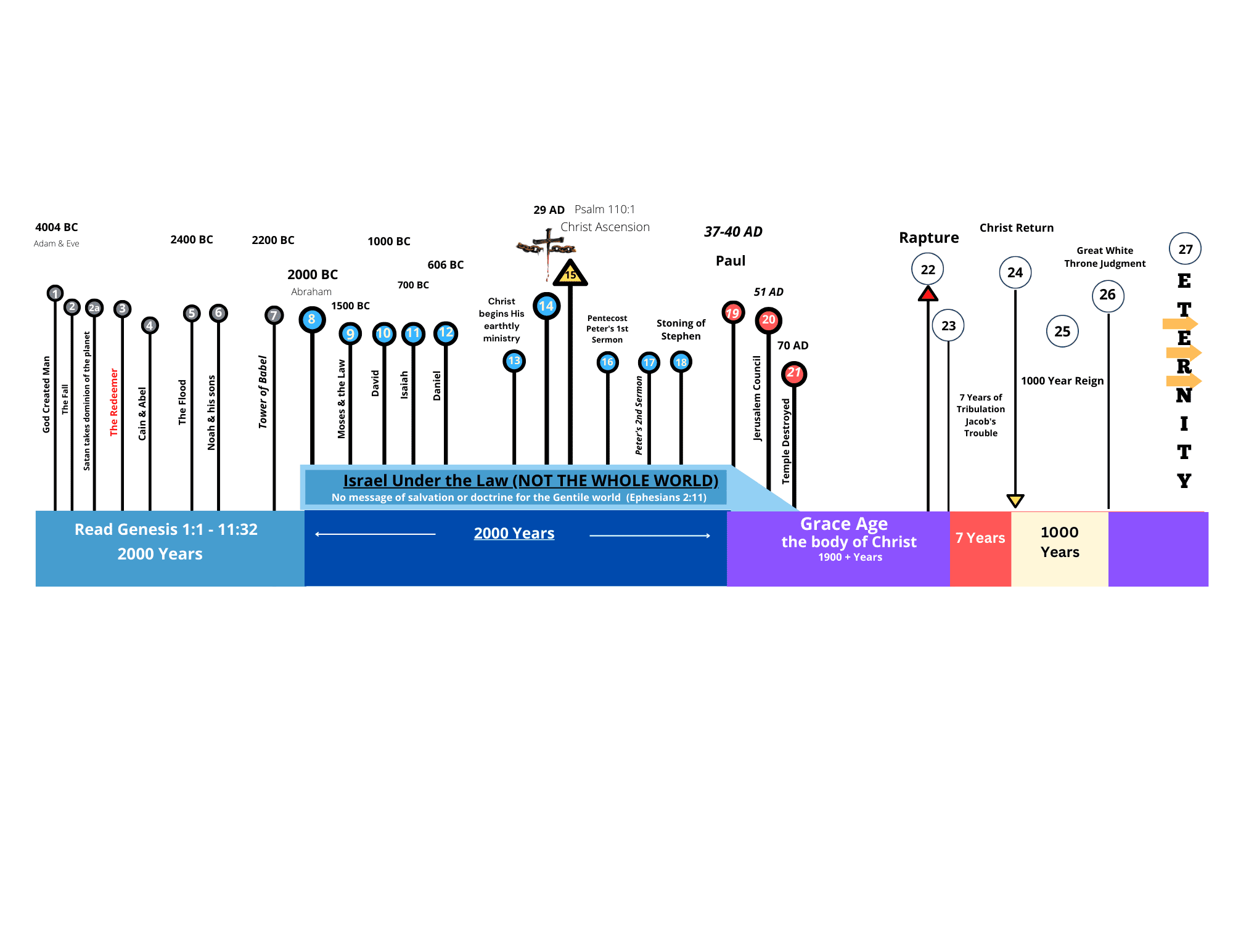
Understanding the context of Luke Chapter One is vital. Rather than rushing ahead to what was revealed to the apostle Paul, a common mistake in most of Christendom, it’s essential to grasp the Bible’s progressive revelation. Properly dividing the Word of Truth reveals a clear understanding, making the Bible both comprehensible and engaging. Attempting to force Paul’s revelations into the four gospels and early Acts causes confusion and division. By approaching the Scriptures with discernment and respecting their chronological unfolding, the richness of God’s message becomes apparent. Mixing God’s Word to fit a particular theology or denominational tradition can hinder the true unity within the body of Christ.
Luke initiates his gospel, breaking the 400 years of silence that followed Malachi’s last words. He picks up precisely where Malachi left off, emphasizing the continuity of Old Testament promises made to Israel, starting with Abraham. The closing verses of the Old Testament anticipate the arrival of someone to pave the way for the Lord. In continuity with this expectation, Luke opens with the angel Gabriel announcing to Zacharias, an elderly priest, that he and his wife will have a son. This son, in the spirit of Elijah the prophet, will turn the hearts of fathers to their children and prepare the way for the Lord. Luke establishes a seamless connection, presenting this son as the fulfillment of Malachi’s prophecy.
Malachi’s prophecy, like all Old Testament prophecies, is specifically addressed to and intended for the nation of Israel. This pattern remains consistent in Luke and the other gospels, with the focus remaining on Israel rather than the Gentile world.
Beloved, rest assured that God had the Gentile world in His divine plan from the very beginning. This was all part of God’s sovereign design, established before the beginning of time as we know it. God, in His sovereignty, knew that Israel would reject Him in unbelief, and He also foresaw the need to send His only Son, Jesus Christ, not only for the redemption of His chosen people but to reconcile the whole world to Himself (2 Corinthians 5:19). However, it’s crucial to approach the study of Luke and the four gospels by recognizing that Christ initially came to His people, the people of Israel. It’s essential not to impose Gentiles or the body of Christ into a timeframe or scriptural context where they do not belong.
Luke 1: The Old Testament Continued
The misconception that Luke or Matthew Chapter 1 marks the beginning of Christianity is incorrect. Instead, it is a continuation of God’s dealings with Israel based on Old Testament covenants and promises.
Christ’s imminent arrival, as announced by the angel in Luke 1, does not initially convey the message of faith alone in His death on the cross, His burial, and His resurrection as the means for salvation. It primarily signifies the fulfillment of God’s promise to the Nation of Israel, which is Israel’s King and a glorious kingdom. (Romans 15:8).
The Four Gospels, within this (literal-in-time) context, are predominantly Jewish. The nation of Israel is operating under the law, with the Temple functioning, sacrifices offered, and maintaining all 613 laws under Judaism. It is only later, through Paul, and not before, that the understanding of not being under the law is revealed and salvation to the Gentile world is offered. The Bible unfolds progressively, and Luke Chapter 1 serves as an introduction to Christ’s first Advent to the Nation of Israel as the promised King. Pastors and theologians commit great violence to God’s word when they force the body of Christ into Luke 1 or any of the four gospels. Yes, the four gospels are building blocks (Romans 15:4), but to teach Luke 1 as doctrine and salvation for the body of Christ is erroneous.
Luke 1:30–33 states, “And the angel said unto her, `Fear not, Mary, for thou hast found favour with God. And, behold, thou shall conceive in thy womb, and bring forth a son, and shalt call his name JESUS. He shall be great, and shall be called the Son of the Highest: and the Lord God shall give unto him the throne of his father David.'” This stems directly from Old Testament promises. Verses 67–74 of Luke 1 emphasize Zacharias’ prophetic blessing, centered on the Lord God of Israel (not the Gentiles) coming to Israel as promised throughout the Old Testament. To crush Israel’s enemies: Who were Israel’s enemies? The Gentiles), to be their King and to set up a glorious kingdom. With their Messiah, Jesus, ruling as King of kings from David’s throne in Jerusalem, again, Luke 1, and the entire book of Luke is a continuation of the Old Testament narrative, fulfilling promises made to the fathers (Abraham, Isaac, and Jacob).
Takeaway
As we study the New Testament, remember that the Lord’s first advent was to the lost sheep of the house of Israel (Matthew 10:5–6; Matthew 15:24), and Jesus was a minister of the circumcision to confirm promises made to the fathers (Romans 15:8). Acts 10 underscores the Jewish adherence to the law and Peter’s initial reluctance to embrace Gentiles. Lastly, in Acts 11:19, which is approximately 12 years after Pentecost, just after the stoning of Stephen, the Jewish believers (Jews who believed that Jesus was the Christ “Messiah”) are scattered because of Paul’s persecution. All that is being preached is the Old Testament (that Jesus was the Christ), AND TO WHO? JEWS ONLY.
Beloved, rest assured that God had the Gentile world in His divine plan from the very beginning. This was all part of God’s sovereign design, established before the beginning of time as we know it. God, in His sovereignty, knew that Israel would reject Him in unbelief, and He also foresaw the need to send His only Son, Jesus Christ, not only for the redemption of His chosen people but for the reconciliation of the entire world to Himself. However, it’s crucial to approach the study of Luke and the four gospels by recognizing that Christ initially came to His own people, the nation of Israel. It’s essential not to impose Gentiles or the body of Christ into a timeframe or scriptural context where they do not belong.
The progressive revelation unfolds, paving the way for God’s turning to the Gentiles through the Apostle Paul.
‘For whatever things were written before were written for our learning, that we through the patience and comfort of the Scriptures might have hope. ‘
Romans 15:4
by Jamie Pantastico | Dec 14, 2023 | Daily Encouragement |
‘Therefore by the deeds of the law no flesh will be justified in His sight, for by the law is the knowledge of sin.’
Romans 3:20
Introduction:
In Romans 3:20, the Apostle Paul emphatically declares that no one can be justified (saved) by keeping the law. The law, given to Moses, serves as a moral compass but cannot save us; instead, it exposes our shortcomings and condemns us. The law’s purpose is not to provide salvation but to highlight our need for it.
The Ministry of Death:
‘But if the ministry of death, written and engraved on stones, was glorious, so that the children of Israel could not look steadily at the face of Moses because of the glory of his countenance, which glory was passing away, ‘
II Corinthians 3:7
As 2 Corinthians 3:7 reveals, the law is the ministry of death. Its righteous standards are impossible for humans to fully meet; they condemn rather than redeem. However, there’s a pivotal shift in understanding what’s required for salvation when we turn to the very next verses, Romans 3:21–22.
Salvation by Faith Alone:
‘But now the righteousness of God apart from the law is revealed, being witnessed by the law and the prophets, even the righteousness of God, through faith in Jesus Christ, to all and on all who believe. For there is no difference; ‘
Romans 3:21-22
Romans 3:21–22 illuminates the heart of the gospel. Paul, having received this revelation from the ascended Lord, underscores that salvation comes through faith alone in the gospel (1 Corinthians 15:1–4)—the death, burial, and resurrection, apart from the law. This truth, though undermined by most of Christendom, is the ONLY means for salvation for mankind today.
Conclusion:
The law’s role is to convict and condemn, but faith in Christ brings righteousness. As you study these verses, grasp the profound simplicity: salvation is a gift (Romans 5:15) received by grace through faith alone in the finished work of the cross. Embrace this truth, allowing it to transform your understanding of God’s amazing grace.
Verses Used:
Romans 3:20
2 Corinthians 3:7
Romans 3:21-22
1 Corinthians 15:1-4
Romans 5:15
Reminder: Take time to study and reflect on these verses to deepen your understanding of God’s redemptive plan.
by Jamie Pantastico | Dec 9, 2023 | Daily Encouragement |
In the tough times we face, it’s like being caught in a never-ending storm where everything feels heavy and overwhelming. But guess what? We have something incredible to hold on to—God’s promises. The Bible verses below (5 from the Old Testament and 5 from the New Testament) are powerful reminders that, even when life gets tough, we’re not alone. God, who loves us like a caring Shepherd and our ultimate Savior, says, “Cast all your anxieties on Him because He cares for you.”
So, dive into these Bible verses, read them several times, pray, and share them with others who are also facing tough challenges.
In the middle of the darkest and most difficult times, these verses show us how to find strength that goes beyond what we can figure out. In other words, we don’t need to ask God (even though we all do). Why is this happening to me? But instead, we put our trust in Him and praise Him because God is with us, and all things work together for good for those who love God.
God’s word is our source of peace, reminding us that even when things look like there is no way out of the storm, God is right there to help and comfort us. Let’s use these verses as a guide, trusting that God’s got our backs through every tough moment.
Old Testament
1. Psalm 34:17–18
“The righteous cry out, and the Lord hears,
And delivers them out of all their troubles.
The Lord is near to those who have a broken heart,
And saves such as have a contrite spirit.”
2. Isaiah 41:10
“Fear not, for I am with you;
Be not dismayed, for I am your God.
I will strengthen you,
Yes, I will help you,
I will uphold you with My righteous right hand.”
3. Psalm 23:4
“Yea, though I walk through the valley of the shadow of death,
I will fear no evil;
For You are with me;
Your rod and Your staff, they comfort me.”
4. Jeremiah 29:11
“For I know the thoughts that I think toward you, says the Lord,
thoughts of peace and not of evil, to give you a future and a hope.”
5. Psalm 46:1–2
“God is our refuge and strength,
A very present help in trouble.
Therefore, we will not fear,
Even though the earth be removed,
And though the mountains be carried into the midst of the sea.”
New Testament
1. Matthew 11:28–30
“Come to Me, all you who labor and are heavy laden,
and I will give you rest. Take My yoke upon you and learn from Me,
for I am gentle and lowly in heart, and you will find rest for your souls.”
2. Philippians 4:6-7
“Be anxious for nothing, but in everything by prayer and supplication,
with thanksgiving, let your requests be made known to God;
and the peace of God, which surpasses all understanding,
will guard your hearts and minds through Christ Jesus.”
3. John 14:27
“Peace I leave with you, My peace I give to you;
not as the world gives do I give to you.
Let not your heart be troubled, neither let it be afraid.”
4. Romans 8:28
“And we know that all things work together for good to those who love God,
to those who are the called according to His purpose.”
5. 2 Corinthians 1:3–4
“Blessed be the God and Father of our Lord Jesus Christ, the Father of mercies
and God of all comfort, who comforts us in all our tribulation,
that we may be able to comfort those who are in any trouble,
with the comfort with which we ourselves are comforted by God.”

by Jamie Pantastico | Dec 5, 2023 | Daily Encouragement |
In the powerful words of Colossians 3:3, the apostle Paul unveils profound truths that would take a lifetime to unpack, but what stands out and is made clear is our position as believers the instant we believe the gospel—hidden with Christ in God.
Studying and deepening our understanding of our current position “in Christ with God” empowers believers to live fearlessly, grounded in the profound truth of God’s Word.
‘For you died, and your life is hidden with Christ in God. ‘
Colossians 3:3
Looking at Colossians 3:3, let’s compare scripture with scripture; it is the only way to study the Word of God.
‘For you (#1 believers) died (#2 at the moment a person believes the gospel their sin nature was nailed to the cross and died when Christ died), and your life (#3 “new life” – when Christ died we died when Christ was buried we were buried, when Christ rose from the dead we too were risen with Him victorious of sin, the law, Satan and death to a new life) is hidden with Christ in God (#4 look at our position as believers; we are eternally protected by Christ as the Head of the body in the Kingdom of God).
Number One
For you,…
The apostle Paul always writes to believers, never to unbelievers.
Number Two
…For you died,
‘knowing this, that our old man was crucified with Him, that the body of sin might be done away with, that we should no longer be slaves of sin. ‘
Romans 6:6
Number Three
…and your new life,
‘Therefore, if anyone is in Christ, he is a new creation; old things have passed away; behold, all things have become new. ‘
II Corinthians 5:17
Number Three: Continued
When someone believes the gospel, as outlined in 1 Corinthians 15:1-4, which details Christ’s death, burial, and resurrection, they identify with these key aspects of Christ’s redemptive work. In simple terms, through faith, they identify themselves with Christ’s death and burial. Additionally, believers, by identification, share in Christ’s victorious resurrection. Just as Christ triumphantly rose from the dead, conquering sin, the law, Satan, and death, believers, through identification, participate in Christ’s victory. It’s a remarkable truth that resonates with awe and gratitude. The victory that Christ secured becomes a shared triumph for those who believe the gospel—a profound and awe-inspiring reality! Praise God.
#3 continuing…we to are victorious
‘So when this corruptible has put on incorruption, and this mortal has put on immortality, then shall be brought to pass the saying that is written: “Death is swallowed up in victory.” “O Death, where is your sting? O Hades, where is your victory?” The sting of death is sin, and the strength of sin is the law. But thanks be to God, who gives us the victory through our Lord Jesus Christ.’
I Corinthians 15:54–57
Number Four
The believer’s extraordinary position the moment we believe the gospel is…
…hidden with Christ in God.
‘And I give them eternal life, and they shall never perish; neither shall anyone snatch them out of My hand. My Father, who has given them to Me, is greater than all; and no one is able to snatch them out of My Father’s hand. ‘
John 10:28-29
‘What then shall we say to these things? If God is for us, who can be against us? He who did not spare His own Son, but delivered Him up for us all, how shall He not with Him also freely give us all things? Who shall bring a charge against God’s elect? It is God who justifies. Who is he who condemns? It is Christ who died, and furthermore is also risen, who is even at the right hand of God, who also makes intercession for us. Who shall separate us from the love of Christ? Shall tribulation, or distress, or persecution, or famine, or nakedness, or peril, or sword? As it is written: “For Your sake we are killed all day long; We are accounted as sheep for the slaughter.” Yet in all these things we are more than conquerors through Him who loved us. For I am persuaded that neither death nor life, nor angels nor principalities nor powers, nor things present nor things to come, nor height nor depth, nor any other created thing, shall be able to separate us from the love of God which is in Christ Jesus our Lord.’
Romans 8:31-39

by Jamie Pantastico | Nov 27, 2023 | Daily Encouragement |
‘For thus says the Lord of hosts: “He sent Me after glory, to the nations which plunder you; for he who touches you touches the apple of His eye. ‘
Zechariah 2:8
Zechariah 2:8 speaks of God’s protective love for His chosen people, the Jewish people. Let’s explore parallel passages in the apostle Paul’s writings that echo this theme for us today under the dispensation of grace:
1. Philippians 1:28–29
‘and not in any way terrified by your adversaries, which is to them a proof of perdition, but to you of salvation, and that from God. For to you it has been granted on behalf of Christ, not only to believe in Him, but also to suffer for His sake, ‘
Please take the time to read this verse carefully several times to grasp the significance of these words. Often, we read these without truly pondering their implications. The individuals being referred to here are those who oppose believers, individuals responsible for the persecution of believers. These persecutors have, in essence, hardened themselves against God, sealing their own eternal doom. This reality remains unchanging. Anyone who opposes the gospel or inflicts persecution upon believers, barring their own salvation, is heading towards eternal doom—that’s the essence of perdition. Paul is conveying that those who persecute believers and subject them to external pressures are ultimately destined for their own perdition, their self-inflicted doom.
Moreover, this persecution serves as evidence of our own salvation. When external pressures and opposition arise, it becomes a validating mark of our genuine faith. It’s a cautionary note that if everyone around us speaks only praise and has nothing critical to say, we should examine our faith. The unbelieving world, inherently in disagreement with our beliefs and values, should not readily complement us. Paul, in his message to the Philippians, emphasizes that when faced with pressures from the outside world, be it from Judaisers (legalists), Pagans, or Romans, it serves as evidence of both the persecutors’ perdition and the believers’ salvation.
2. Ephesians 1:4-5
‘just as He chose us in Him before the foundation of the world, that we should be holy and without blame before Him in love, having predestined us to adoption as sons by Jesus Christ to Himself, according to the good pleasure of His will,’
Just as God protects Israel, He has chosen and predestined grace-age believers in Christ. We are His adopted children, protected, cherished, and loved.
3. Romans 8:38–39
“For I am convinced that neither death nor life, neither angels nor demons, neither the present nor the future, nor any powers, neither height nor depth nor anything else in all creation, will be able to separate us from the love of God that is in Christ Jesus our Lord.”
The apostle Paul emphasizes that nothing can separate us from God’s love. We are the “apple of His eye,” securely held in His protective embrace.
4. 1 Corinthians 3:16
‘Do you not know that you are the temple of God and that the Spirit of God dwells in you?’
Believers are indwelled with God, the Holy Spirit. Much like the eye, which is precious and sensitive, God’s Spirit resides within us. Those who seek to harm us are essentially attempting to harm God Himself.
5. Galatians 4:6-7
‘And because you are sons, God has sent forth the Spirit of His Son into your hearts, crying out, “Abba, Father!” Therefore, you are no longer a slave but a son, and if a son, then an heir of God through Christ.’
We are not just saved from hellfire; we are God’s children. His Spirit within us testifies to our identity as heirs of His promises.
In summary, these passages reinforce the truth that believers are sealed for eternity as God’s children, protected, and cherished by God. Just as Zechariah 2:8 speaks of the nation of Israel being the “apple of His eye,” Paul’s writings echo this divine affection and security for both Jews and Gentiles in this dispensation of grace. May this assurance strengthen your faith today. 🙏🏼✨
Recommended reading:
Chosen in Grace – Zechariah 2:8 “the Apple of His Eye”