by Jamie Pantastico | Jul 22, 2025 | Verse-by-Verse Bible Studies |
📜 Background & Context
✍️ Author: Paul the Apostle
👥 Written To:
The church in Corinth—and to all members of the body of Christ
When:
Around AD 55-56
📂 Purpose of the Passage:
To clearly define the gospel Paul preached—the gospel of grace, which alone is the means of salvation. This passage stands as the clearest delineation of the gospel in all of Scripture.
🔍 1 Corinthians 15:1–4
“Moreover, brethren, I declare to you the gospel which I preached to you, which also you received and in which you stand, by which also you are saved, if you hold fast that word which I preached to you—unless you believed in vain. For I delivered to you first of all that which I also received: that Christ died for our sins according to the Scriptures, and that He was buried, and that He rose again the third day according to the Scriptures.”
✨ Phrase-by-Phrase Breakdown
“Moreover, brethren, I declare to you the gospel which I preached to you…”
- Paul opens with urgency: this is the gospel.
- Not a gospel, not one of many gospels—the gospel Paul preached uniquely to both Jew and Gentile (cf. Galatians 1:11–12).
- Paul is not continuing what Peter and the 11 were preaching—this gospel was hidden in God since the world began (cf. Romans 16:25).
- It was revealed to Paul by direct revelation from the risen Lord (Galatians 1:11–12).
“Which also you received and in which you stand…”
- The Corinthians had received this gospel by faith alone.
- It is the foundation of their position in Christ. They now stand on it—not on law, not works, not ritual.
“By which also you are saved…”
- This gospel alone saves.
- There is no salvation outside of belief in this message (cf. Romans 1:16).
- Paul’s gospel will be the standard at the Great White Throne judgment (cf. Romans 2:16).
“If you hold fast that word which I preached to you—unless you believed in vain.”
- Holding fast doesn’t mean working to stay saved—it means believing the right gospel.
- “Unless you believed in vain” means believing something false or without true understanding.
- Faith is only saving faith if it is placed in the right object: Christ’s finished work.
⚠️ You must know what you’re believing. A vague belief in Jesus isn’t enough. This gospel is specific.
“For I delivered to you first of all that which I also received…”
- Paul is passing along what was directly revealed to him by Christ (cf. Galatians 1:11–12).
- The gospel he received was not from man or tradition—it was by revelation from the risen Lord.
“That Christ died for our sins according to the Scriptures…”
- The gospel begins with the substitutionary death of Christ.
- This wasn’t random or new—it was according to the prophetic plan of God (e.g., Isaiah 53).
- Sin had to be paid for—and Jesus paid it all.
“And that He was buried…”
- The burial confirms the reality of His death.
- Jesus did not swoon, fake, or vanish—He died, and was laid in the tomb.
“And that He rose again the third day according to the Scriptures…”
- The resurrection is central to the gospel.
- It confirms that Christ’s payment for sin was accepted.
- It was also prophesied (Psalm 16:10; Hosea 6:2).
- A dead Savior can’t save anyone—but Christ is risen!
✅ What It Does Mean
- Salvation is by faith in a specific message: Christ died for our sins, was buried, and rose again.
- Paul’s gospel is not optional or secondary—it is the one and only gospel by which we are saved.
- Faith must be rooted in truth, not emotion, tradition, or sincerity alone.
❌ What It Does Not Mean
- This is not a general call to follow Jesus, imitate His life, or commit to religion.
- It is not about joining a church or keeping the commandments.
- Believing “in vain” doesn’t mean losing salvation—it means believing the wrong thing, or with no real understanding.
Summary
1 Corinthians 15:1–4 is the clearest summary of the gospel of grace. It is this gospel—and no other—that saves.
It is this gospel by which you stand, this gospel by which you are saved, and this gospel by which God will one day judge the world (Romans 2:16).
You must know what you believe. And you must believe the right gospel.
Christ died for your sins.
He was buried.
He rose again the third day.
That’s the gospel. Believe it and be saved.

by Jamie Pantastico | Jul 20, 2025 | Israel and Bible Prophecy |
On July 18, 2025, the GENIUS Act (S.394) was quietly signed into law, establishing a new federal framework for stablecoin regulation in the United States. This bill was passed with strong bipartisan support—first in the Senate, then the House—and attached (deceptively) to the National Defense Authorization Act to ensure swift passage with minimal debate or public attention.
The law introduces a new class of non-bank digital currency issuers, regulated directly by federal agencies like the Office of the Comptroller of the Currency (OCC). In short, it lays the legal and technical foundation for a programmable, “traceable”, centralized digital economy—something
This has sweeping implications:
- Imagine private finance companies—like PayPal, Stripe, or even new government-approved startups like let’s say X—issuing currency that you use to buy groceries, pay rent, or access healthcare.
- Now imagine that every transaction you make is tracked, recorded, and potentially restricted—not by a bank, but by a federal regulator (overseer) with direct authority.
This isn’t just about currency. It’s about power.
Scripture Has Already Told Us Where This Leads
You don’t have to be a prophecy expert to see the writing on the wall. This is exactly what God’s Word has forewarned.
A Global System of Control
Revelation 13:7 — “And authority was given him over every tribe, tongue, and nation.”
Revelation 13:17 — “No one may buy or sell except one who has the mark…”
In order for this level of control to be possible, the world must first be conditioned to accept digitally governed commerce, compliance-based finance, and centralized currency systems.
We’re not there yet. But we are closer than ever.
Bible prophecy has warned about for centuries.
This isn’t speculation. This isn’t coming.
It’s here. It’s law. And it changes everything for everyone.
This 2-part series explains:
- What the GENIUS Act really does
- Why it matters prophetically
- What you can do now to stay informed and grounded in God’s Word
Let’s walk through this together.
🗓️ How It Happened
✅ Senate Passed
On June 17, 2025, the Senate approved the GENIUS Act in a 68–30 bipartisan vote.
📚 Sources:
AP News | Axios | LegiScan | Wikipedia
✅ House Passed
On July 17, 2025, the House passed the bill 308–122, after it was quietly attached to the must-pass National Defense Authorization Act (NDAA)—a strategic move that ensured it would go through with little opposition.
📚 Sources:
Axios | Wikipedia
✅ Signed Into Law
On July 18, 2025, President Trump signed the bill, making it official federal law. The White House praised the measure as a “major innovation milestone,” introducing stablecoin oversight under the U.S. Treasury’s authority.
📚 Sources:
The Verge | LegiScan | Wikipedia
❗What This Means Right Now
There are no more legislative steps. The GENIUS Act is Public Law. Here’s what comes next:
🏛️ Regulatory Frameworks
Agencies like:
- OCC (Office of the Comptroller of the Currency)
- Federal Reserve
- FDIC
- NCUA
…will now begin drafting rules and oversight protocols for stablecoin issuers.
🏢 Issuer Registration & Compliance
Any company issuing dollar-backed digital assets must:
- Apply as a “permitted payment stablecoin issuer”
- Hold 1:1 reserves
- Submit to regular audits
- Meet strict anti-money laundering protocols
⏳ Transition Periods
Some portions of the law include 3-year grace periods, during which non-compliant stablecoins will be phased out and new rules fully enforced.
📚 Sources:
The Verge | Morgan Lewis | Chamber of Progress
📊 Consumer & Market Impact
Expect:
- New federal apps, wallets, or portals
- Public comment periods on rules
- Announcements from major fintech companies
- Increased surveillance in digital financial transactions
Prophetic Reflection
If you’ve followed Bible prophecy for any length of time, you can feel the weight of this moment. This is no longer theory—it’s legislative reality.
“No one may buy or sell except one who has the mark…”
—Revelation 13:17
This law builds the infrastructure for that kind of system:
- Programmable money
- Regulated access
- Global alignment
And it has now been made lawful in the United States.
🛡️ What You Can Do Now
👁️ 1. Watch Upcoming Rulemaking
Federal agencies will soon release draft rules—read them, share them, and submit comments. This is the time to speak up before full implementation rolls out.
🔔 2. Stay Informed
Sign up for legislative updates at:
The GENIUS Act is now Public Law. Monitoring the rollout is essential.
🗣️ 3. Engage Your Community
Talk about this. Most people have no idea it even passed. Many will laugh—until they look it up and realize it’s real. Be the one who tells them the truth—with boldness and clarity.
📲 4. Stay Connected With Us
Make sure you’re following us on social media and that you’re signed up for our daily devotional emails—because we will be covering this regularly with updates, biblical insight, and clear teaching.
👉 Join our email list here
👉 Follow us on Facebook | X | Telegram
This is huge, folks. Don’t miss what’s unfolding right before our eyes.
🙏 5. Pray and Prepare
This isn’t fear—it’s foresight. The Word of God told us these days would come. We weren’t left in the dark—we’ve been warned, so we can be ready, watchful, and firm in the faith.
“Be sober, be vigilant… because your adversary the devil walks about like a roaring lion, seeking whom he may devour.”
—1 Peter 5:8
“And that, knowing the time, that now it is high time to awake out of sleep…”
—Romans 13:11
This isn’t something that’s on the way.
It’s unfolding right now.
👉 Want to understand what this means and why it matters?
⚠️Check out Part 1 for the prophetic implications and Part 2 for a breakdown of what the law actually says.
by Jamie Pantastico | Jul 20, 2025 | Devotionals |
Resting in His Control Amidst the Chaos
Scripture:
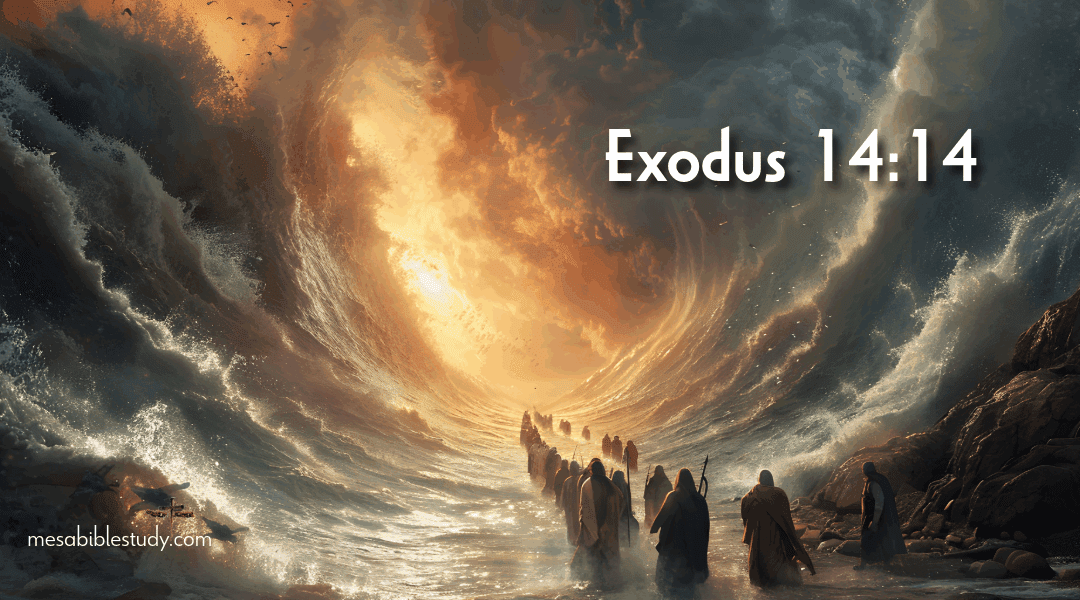
Exodus 14:14 – “The Lord will fight for you, and you shall hold your peace.”
Devotional:
The world is filled with constant turmoil, and no doubt many believers are experiencing never-ending turmoil, hanging on for dear life wondering when will this end, this to much for me to bear. Whether it’s the struggles we face personally or the chaos we see in the world around us, it’s easy to feel overwhelmed and think that the battle is ours to fight. But as believers, we are called to a different reality.
Exodus 14:14 reminds us that “The Lord will fight for you, and you shall hold your peace.” When Israel was cornered by the Red Sea and Pharaoh’s army, they were terrified. But God assured them that He would fight their battles, and they were to trust Him. This promise is just as true for us today. When we face trials, we don’t have to fight in our own strength. God is in control, and He is fighting for us.
Reflection:
It’s easy to try to control our circumstances, but true peace comes when we relinquish control and trust that God is sovereign over all. No matter how chaotic life may seem, we can hold our peace knowing that God is at work. He is sovereign over every situation, and His will is perfect. Resting in His control doesn’t mean we’re passive, but rather that we’re trusting in His ability to handle what we cannot.
When we trust in God’s sovereignty, we can stand firm in the assurance that He is fighting for us. This doesn’t mean that we won’t face difficulties, but it means that we don’t face them alone. God is with us, and He is working all things together for our good (Romans 8:28).
Prayer:
Lord, thank You for Your sovereignty and for fighting on our behalf. Help us to trust in Your control, even when life feels overwhelming. May we hold our peace and rest in the assurance that You are always working for our good. Strengthen our faith and help us to trust in Your perfect plan.
What to Do Now?
If you’re wondering how to apply today’s devotional in your life, check out our “What to Do Now?” section on the devotional page. This resource will guide you in the practical steps of studying God’s Word and deepening your faith in Christ.

by Jamie Pantastico | Jul 19, 2025 | Daily Encouragement |
If there were one verse that captures the very heart of the gospel, it’s this:
“For He made Him who knew no sin to be sin for us, that we might become the righteousness of God in Him.”
— 2 Corinthians 5:21
This verse contains the most glorious truth ever revealed to mankind. In just a few words, Paul summarizes the finished work of Christ and the divine transaction that makes salvation possible. It is the great exchange—where Jesus took what we deserved, so we could receive what only He deserved.
🔄 The Divine Exchange
- “He made Him…” — God the Father initiated this plan. Jesus willingly submitted to it. Salvation is not man ascending to God—it is God coming down to us.
- “…who knew no sin…” — Christ was completely sinless. He never once transgressed the law. He was holy, blameless, undefiled—yet fully human.
- “…to be sin for us…” — Jesus was not a sinner, but He was treated as one. At the cross, He bore the weight of all sin. He was made to be the sin offering, satisfying the justice of God on our behalf.
- “…that we might become the righteousness of God in Him.” — In exchange, we—who were unrighteous—receive Christ’s righteousness. Not our own. Not earned. Not improved. But imputed, by grace, through faith.
✝️ This Is the Gospel
The gospel is not about behavior modification, law-keeping, or religious performance. It is about substitution. Christ stood in our place, bearing our judgment, and now we stand in His place—righteous, accepted, forgiven, and secure.
If you ever doubt whether God loves you, look at the cross. If you wonder whether your salvation is secure, look at the empty tomb. If you forget who you are, remember this verse: You are the righteousness of God in Christ.
🔗 Watch the Video: “The Heart of the Gospel of Grace”
Want to see this verse explained clearly and passionately? Watch the short video below—and share it with someone who needs the hope and truth of the gospel today.

by Jamie Pantastico | Jul 17, 2025 | Devotionals |
Finding Strength in Christ’s Sufficiency
Scripture:
2 Corinthians 12:9 – “But he said to me, ‘My grace is sufficient for you, for my power is made perfect in weakness.’ Therefore I will boast all the more gladly of my weaknesses, so that the power of Christ may rest upon me.”
Devotional:
In a world that celebrates strength, self-sufficiency, and success, it can be difficult to embrace weakness. Yet, God’s Word flips the script. In 2 Corinthians 12:9, Paul reminds us that it is in our weakness that God’s power is made perfect. When we are weak, God’s grace shines through, and His strength is revealed in ways that we could never manufacture on our own.
The Apostle Paul understood this paradox deeply. He faced countless trials—persecution, hardship, and personal weakness. But instead of relying on his own strength, Paul chose to boast in his weaknesses, knowing that it was in those very places that Christ’s power would rest upon him. God’s grace wasn’t just enough—it was sufficient. It was in the midst of his struggles that Paul found the true power of Christ, and it’s in our own weaknesses that we can experience the sufficiency of God’s grace.
Reflection:
It’s easy to want to avoid weakness, but it’s in our weakest moments that God’s grace becomes most evident. Instead of striving to appear strong or self-sufficient, we are called to rest in the sufficiency of Christ. His grace covers us, sustains us, and empowers us to endure. It is not our strength that brings us peace; it is His.
When we accept our weakness and rely on God’s grace, we experience His strength in a profound way. Our limitations don’t limit God—they make room for His power to be displayed in us.
Prayer:
Lord, thank You for Your grace that is sufficient for every need. Help me to embrace my weaknesses and rely on Your strength. May Your power be made perfect in my limitations, and may I rest in the assurance that Your grace is more than enough.