Faith Under Pressure Series — Part 18
‘When my father and my mother forsake me, Then the Lord will take care of me.’
Psalms 27:10
Context & Connection
In Part 17, David prayed one of the most honest prayers in Psalm 27: “Do not reject me… Do not forsake or abandon me.” Now in verse 10, he addresses one of the deepest human wounds — abandonment.
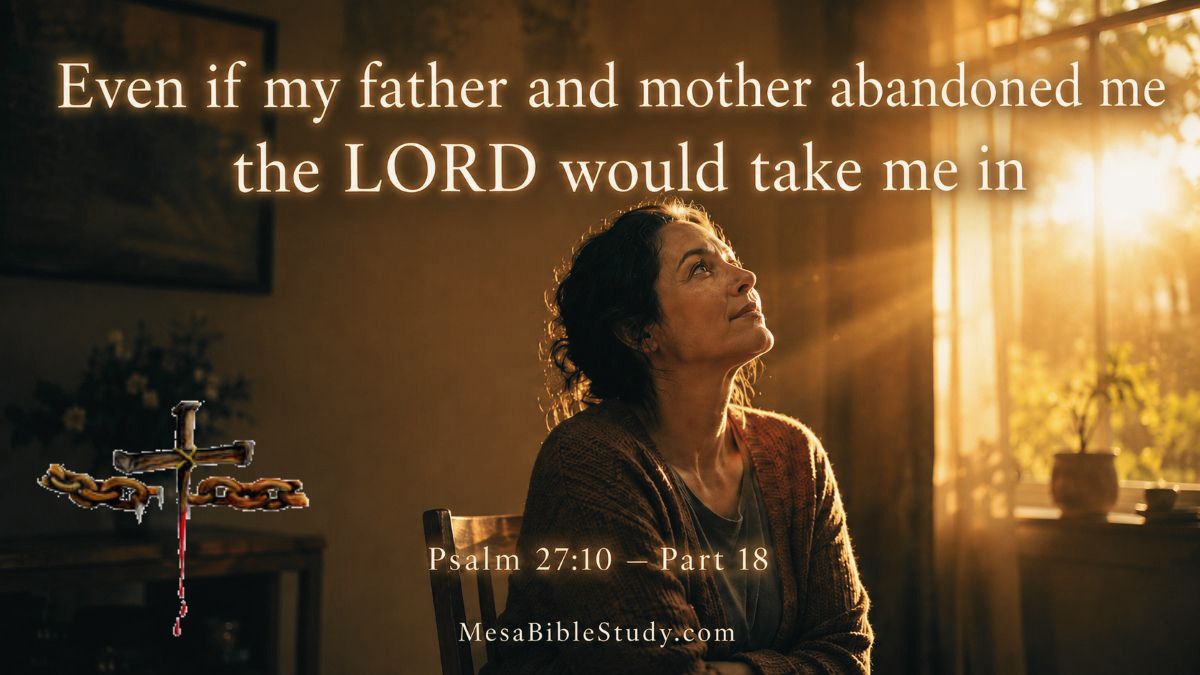
He says, “Even if my father and mother abandoned me, the LORD will take care of me.”
The key truth in Part 18 is this: When human support fails, the Lord receives His own. Human love may fail. People may leave. But the Lord takes in His people.
Even If My Father and Mother Abandoned Me
Father and mother represent some of the closest human relationships in life. They are the ones who should protect, nurture, and receive their child. By speaking of them abandoning him, David uses the strongest earthly picture of rejection.
He is saying: Even if the closest human support fails… even if those who should receive me turn away… the Lord will take me in. This is faith under pressure speaking into one of the deepest wounds a human heart can know.
The Pain of Abandonment
Abandonment reaches deep into the heart. It can make a person feel unwanted, forgotten, rejected, unseen, and alone. Pressure is heavy enough by itself. When it is mixed with rejection or loneliness, the burden can feel almost unbearable.
David does not ignore that pain. He names it. Scripture does not treat abandonment lightly. The Lord knows the ache of rejection and the pain of being left.
The LORD Would Take Me In
David does not merely say the Lord notices him or feels sorry for him. He says the Lord takes him in. This is the language of reception, care, belonging, and personal attention.
The Lord does not leave His own outside. He does not turn away the heart that seeks Him. When human support fails, the Lord receives His own. That is strong comfort. The Lord Himself becomes the refuge of the rejected.
When Human Support Fails
Human support is a gift from God, but it is not ultimate. People can fail, leave, misunderstand, grow weary, or be unable to carry the burden with us. Sometimes abandonment is intentional. Sometimes it comes through weakness.
But Psalm 27:10 gives a greater truth: the Lord’s care is not fragile. His faithfulness is not limited by human failure. His nearness is not dependent on whether people stay.
Rejection Does Not Define the Believer
One of the cruelest effects of abandonment is that it tempts the heart to form an identity around rejection: “I am unwanted… I am forgotten… I am alone.”
Psalm 27:10 speaks a better word. Human rejection does not define the believer. The Lord’s reception does. If the Lord takes you in, then rejection does not get the final word. David’s confidence is not in whether every earthly relationship remains steady. His confidence is in the Lord who receives His own.
The LORD’s Care Is Personal
David’s words are deeply personal: “the LORD will take care of me.” This is not distant theology. David believes (faith) the Lord sees him, knows him, and will receive him. The Lord’s care is greater than the failure of human support.
He knows the wound. He knows the grief. He knows the places where people failed. And He receives His own.
The LORD Does Not Abandon His Own
People may fail, but the Lord is faithful. People may forsake, but the Lord remains. For believers today, this truth is made even more precious in Christ. Those who have trusted Him are saved by grace and accepted in Him.
The believer’s standing is not based on human approval or whether others understand us. It is based on Christ. In Him, the believer is not abandoned. In Him, the believer is received.
Abandonment and Faith Under Pressure
Few things test faith like abandonment. It is one thing to face pressure with support around you. It is another to face pressure when you feel alone.
David does not say the pain is imaginary. He does not pretend abandonment does not hurt. He simply brings a greater truth into the pain: “the LORD will take care of me.” Faith under pressure does not deny the wound. Faith brings the wound into the care of the Lord.
What This Means
Psalm 27:10 teaches us that the Lord’s care is greater than human failure. David speaks of the deepest earthly abandonment, then answers it with the greater faithfulness of God. Human abandonment is not ultimate. Human rejection is not final. The Lord receives His own. When human support fails, the believer is not left alone.
A Word of Encouragement
If you know the pain of abandonment — if someone who should have stayed left, or someone who should have cared failed you — hear David’s words:
“Even if my father and mother abandoned me, the LORD will take care of me.”
The Lord has not abandoned you. The Lord has not forgotten you. Human support may fail, but the Lord receives His people. You are not defined by who left. You are held by the Lord who takes in His own.
For Further Study
Read Psalm 27:10 slowly. Notice the contrast: human abandonment and divine reception. Ask yourself: Am I allowing the failure of people to define me, or am I resting in the Lord who receives His own?
Faith Under Pressure Series
Previous in the Series:
Part 17 — Do Not Reject Me
Next in the Series:
Part 19 — Teach Me How You Want Me to Live
Back to Series Page:
Faith Under Pressure — A Psalm 27 Devotional Series